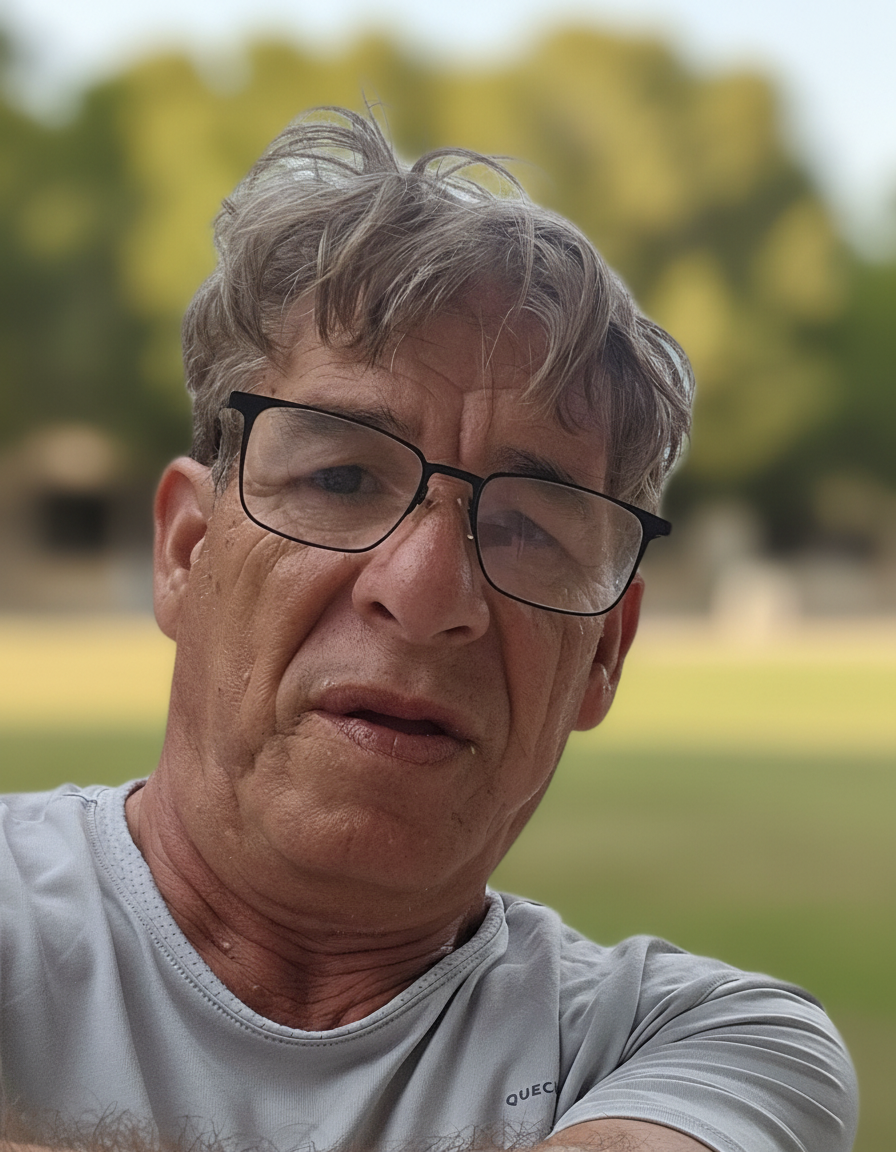
M. SENOUSSI Mohammed

MCA

Directory of teachers

Department

Department of Letters and English Language

Research Interests

Literature Politics History Language Human rights Culture

Contact Info

University of M'Sila, Algeria

On the Web:

  • Google Scholar N/A
  • ResearchGate
    ResearchGate N/A
  • ORCID N/A
  • SC
    Scopus N/A

Recent Publications

2025-09-02

Unearthing Female Jeopardies And The Quest For Algerian Female Identity Through Language And Narrative In Assia Djebar’s So Vast The Prison

The present paper sheds light on the issue of female identity reconstruction and negotiation as being contingently manipulated by the lingual collision that ensues from being affiliated to twofold divergent cultural systems through the close reading of Assia Djebar’s So Vast the Prison (1995, trans. 1999). Using postcolonial feminist insights, the paper attempts to convincingly capture the author’s contention to unearth Algerian women predicaments through ‘the adversarial tongue’, French, due to the lack of mastering the Arabic language. The novel displays Djebar’s paradoxical attitude toward addressing postcolonial female plights through French as bewildering and inappropriate, at times, and as threading the path for a favourable, freestanding space for unbound scopes of identity re-inscription, at others. This paper also examines the array of innovative hybrid narrative, namely the polyphonic discourse, and the distinct literary devices employed to untangle the ongoing predicaments that disrupt Algerian women. It is revealed that this discourse permits productive personal as well as collective remodelling of Algerian female identity.
Citation

M. SENOUSSI Mohammed, (2025-09-02), "Unearthing Female Jeopardies And The Quest For Algerian Female Identity Through Language And Narrative In Assia Djebar’s So Vast The Prison", [national] مجلة إشكالات في اللغة و الأدب , مجلة إشكالات في اللغة و الأدب

2025-01-15

Unlocking Receptive Skills: Insights from Learners and Teaching Challenges in First-Year Tertiary Education

Unlocking Receptive Skills: Insights from Learners and Teaching Challenges in First-Year Tertiary Education
Citation

M. SENOUSSI Mohammed, (2025-01-15), "Unlocking Receptive Skills: Insights from Learners and Teaching Challenges in First-Year Tertiary Education", [national] , Khayal éditions

2024-09-17

Falling into the Nowhere: Losing Identity with Alzheimer’s in Lisa Genova’s Still Alice

This article puts flesh on the bones of questions concerning the profound impact of Alzheimer’s on identity, using Lisa Genova’s Still Alice (2007) as a focal point and guide. The novel tells the story of Alice, a professor at Harvard who develops early onset Alzheimer’s, taking readers on a journey through the experiences of memory loss and its tragic ramifications. Using literary and psycho-philosophical insights, this article argues that Alice’s personal identity undergoes a profound transformation, challenging the notion that she remains the same Alice as implied by the novel’s title. Indeed, literature can be seen as a laboratory where the unknown realms of diseases can be vividly observed and contemplated. Literature can broaden our understanding of how this neurological disorder affects Alice’s sense of self. In an interdisciplinary approach, this article focuses on three key aspects: chronotopic identity (a concept that has never been explored in relation to Alzheimer’s), narrative identity, and psycho-existential perspectives. In short, this article thus aims at clarifying the changing, unknown, and unstable nature of Alice’s identity within the pages of the novel. Additionally, the article examines how Alzheimer’s is used as a literary device by analyzing some images, symbols, and figurative language in general.
Citation

M. SENOUSSI Mohammed, (2024-09-17), "Falling into the Nowhere: Losing Identity with Alzheimer’s in Lisa Genova’s Still Alice", [national] Interdisciplinary Literary Studies , Penn State Univ

2024-09-01

TEACHING BRITISH CULTURE: SEPARATISTS’ JOURNEY AND FELICIA DOROTHEA HEMANS’ THE LANDING OF THE PILGRIM FATHERS

Integrating culture into language teaching has demonstrated numerous
benefits over the years. In this context, this paper explores the representation of British
culture and identity through the literary works of Felicia Dorothea Hemans, with a
particular focus on her poem "The Landing of the Pilgrim Fathers". The author presents
a comprehensive two-lesson unit plan to impart British culture to EFL students
practically and engagingly. The unit plan combines elements of both Literature and
Civilization courses, catering to the needs of second-year tertiary-level students.
Through collaborative group work, students are divided into small groups of four
members each, making six groups. Central to the unit plan are the 'fact strips', tangible
tools for introducing key aspects of British culture. These fact strips encapsulate
essential cultural insights, ranging from historical milestones to contemporary societal
norms. Working collaboratively, students delve into the aspects of British culture. The
outcomes are highly encouraging, with students marking improvement in British
culture. The positive results obtained underscore the efficacy of integrating practical,
culturally relevant activities into the language teaching curriculum.
Citation

M. SENOUSSI Mohammed, (2024-09-01), "TEACHING BRITISH CULTURE: SEPARATISTS’ JOURNEY AND FELICIA DOROTHEA HEMANS’ THE LANDING OF THE PILGRIM FATHERS", [national] Akofena , Akofena

2024-06-29

A Paratextual Semiotic Reading Of Aissa Cheriet’s La Rocade

This research paper delves into the complex paratextual elements and the profound symbolism within the novel La Rocade (2004) by Aissa Cheriet. It explores how genre categorisation, thresholds, title and cover art serve as gateways to the text, setting expectations and shaping the reader’s engagement with the text connecting him to the historical and cultural realities rooted in the narrative. The paper further analyses the novel’s characters, who represent a microcosm of Algerian society symbolising societal decay and political upheaval. This paper presents the selected novel as a literary work that amalgamates personal narratives with the historical and political fabric of Algeria, inviting readers to reflect on the past’s influence on the present and future.
Citation

M. SENOUSSI Mohammed, (2024-06-29), "A Paratextual Semiotic Reading Of Aissa Cheriet’s La Rocade", [national] Al Omda , University of M'sila

2024-06-01

Interdisciplinary Perspectives on Teaching in Higher Education: Fostering Critical Reading Strategies across Cultural Literary Contexts

In higher education, fostering critical reading strategies across cultural literary contexts presents a formidable challenge. As educational paradigms shift towards interdisciplinary approaches, educators must grapple with the complex interplay of diverse cultural perspectives within the realm of literary analysis. This paper explores the significance of interdisciplinary perspectives in teaching critical reading skills, particularly in navigating the rich tapestry of cultural literary contexts. Drawing upon insights from various disciplines such as literature, cultural studies, and education, it examines strategies for effectively integrating diverse texts and methodologies into the curriculum. Furthermore, it addresses the challenges inherent in engaging students with interdisciplinary teaching strategies and offers recommendations for enhancing pedagogical practices. By embracing interdisciplinary approaches,
educators can cultivate a more nuanced understanding of literature across cultural boundaries and empower students to critically engage with texts in an increasingly globalized world
Citation

M. SENOUSSI Mohammed, (2024-06-01), "Interdisciplinary Perspectives on Teaching in Higher Education: Fostering Critical Reading Strategies across Cultural Literary Contexts", [national] Akofena , Akofena

2024-03-04

The Artificial Intelligence Debate

A keynote speaker, organiser and president of a debate a la Oxfordian between 5 stars students about whether AI is a threat to humanity or not
Citation

M. SENOUSSI Mohammed, (2024-03-04), "The Artificial Intelligence Debate", [national] The Artificial Intelligence Debate , University of M'sila

مناظرة بين طلبة اوائل الدفعات و خمس نجوم

مناظرة بين طلبة اوائل الدفعات و خمس نجوم
Citation

M. SENOUSSI Mohammed, (2024-03-04), "مناظرة بين طلبة اوائل الدفعات و خمس نجوم", [national] University of M'sila

2024-02-29

What Makes a Terrorist Tick in Al Aswany’s The Yacoubian Building?

This article provides a critical reading of Alaa Al Aswany’s novel The Yacoubian Building (2002), evoking important questions about the nature of terrorism in Egypt and how young men are transformed into religious fanatics. While certainly not excusing terrorists’ violent acts, we try to use the novel as a guide to understand what makes a terrorist tick. The novel invites us to witness the fall into the abyss of terror of a young man who dreams of being a policeman. The novel shows that while Taha struggles to change his fate, he faces marginalisation, police corruption, oppression and torture, which finally set him on the path to violence. The paper thus uses the novel as a focal point to broaden our understanding of who a terrorist figure is. Furthermore, we are interested in the literary representations of terrorism and why this novelist chooses terrorism as a main structuring element. By offering a qualitative, different understanding of the fundamental aspects of terrorism, we try to reveal that while it is the terrorist’s finger that pulls the trigger, there is a disorienting history of social, political and economic circumstances behind each bullet. The paper concludes that Al Aswany neither demonises nor offers an apology for extremists. He simply presents them as humans so that we can understand what they are angry about.
Citation

M. SENOUSSI Mohammed, (2024-02-29), "What Makes a Terrorist Tick in Al Aswany’s The Yacoubian Building?", [national] Africa Review , Brill

2024-01-24

دور التعليمية في إنجاز أطروحة الدكتوراه والعوائق الديداكتيكية

دور التعليمية في إنجاز أطروحة
الدكتوراه والعوائق الديداكتيكية
Citation

M. SENOUSSI Mohammed, (2024-01-24), "دور التعليمية في إنجاز أطروحة الدكتوراه والعوائق الديداكتيكية", [national] دور التعليمية في إنجاز أطروحة الدكتوراه والعوائق الديداكتيكية , University of M'sila

2023-12-12

The Future of Academic Writing in the Age of AI: Hybrid Human-AI Writing, Authorial Voice and Post-plagiarism

The rapid development and widespread use of artificial intelligence (AI) in various domains of human activity, including education, poses new ethical and integrity challenges for academic writing. In this paper, I explore the concept of hybrid Human-AI academic writing, which refers to the co-creation of texts by humans and AI systems, such as natural language generation (NLG) tools and paraphrasing software. I examine how hybrid Human-AI academic writing affects the notions of authorial voice and identity, as well as the implications for plagiarism detection and prevention. I also discuss the idea of “post-plagiarism,” which is an era in which advanced technologies make plagiarism irrelevant or impossible to detect, and the need for transdisciplinary research and education to address the ethical issues arising from the integration of AI in academic writing. I argue that hybrid Human-AI academic writing requires a reconceptualization of academic integrity and a redefinition of the roles and responsibilities of writers, educators, and researchers in the age of AI.
Citation

M. SENOUSSI Mohammed, (2023-12-12), "The Future of Academic Writing in the Age of AI: Hybrid Human-AI Writing, Authorial Voice and Post-plagiarism", [national] Algerian Scientific Publication and Peer Review: Status Quo and Future Directions , University of M'sila

2023-08-06

AI and Scientific Research

AI and Scientific Research
Citation

M. SENOUSSI Mohammed, (2023-08-06), "AI and Scientific Research", [national] Doctorial Sciences Sociales , University of Setif 2

الهوية الرقمية للباحث و التعريف بقواعد البيانات البحثية

الهوية الرقمية للباحث و التعريف بقواعد البيانات البحثية
Citation

M. SENOUSSI Mohammed, (2023-08-06), "الهوية الرقمية للباحث و التعريف بقواعد البيانات البحثية", [national] Doctorial Sciences Sociales , University of Setif 2

2023-05-03

Teaching English: How to Plan a Great English Course?

Teaching English: How to Plan a Great English Course?
Citation

M. SENOUSSI Mohammed, (2023-05-03), "Teaching English: How to Plan a Great English Course?", [national] , British Council المركز الثقافي البريطاني

2023-03-11

Is AI a Threat to Humanity?

Is AI a Threat to Humanity?
Citation

M. SENOUSSI Mohammed, (2023-03-11), "Is AI a Threat to Humanity?", [national] Catalyst Annual Conference , Bordj Bou Arréridj

2023-02-05

Exploring the advantages of using short stories in teaching/learning literature: The case of Master students at the University of M'sila

Exploring the advantages of using short stories in teaching/learning literature: The case of Master students at the University of M'sila
Citation

M. SENOUSSI Mohammed, (2023-02-05), "Exploring the advantages of using short stories in teaching/learning literature: The case of Master students at the University of M'sila", [national] Learning English through Literary Texts , University of Setif 2

2023-02-03

Exploring English: Language and Culture

Exploring English: Language and Culture
Citation

M. SENOUSSI Mohammed, (2023-02-03), "Exploring English: Language and Culture", [national] Exploring English: Language and Cutlure , British Council المركز الثقافي البريطاني

2023

The Implications of Chat GPT for Teaching in the EFL Class: How do we Teach Writing in a Post-AI World?

Artificial Intelligence has the potential to transform the way we teach and learn in various ways. With the emergence of Chat GPT, teachers are wondering about whether to ban or use it? Indeed, this new buzz in teaching/learning is becoming a trend that we cannot ignore. It is a call to revolutionize the way we teach and to ask the question of whether teachers are still necessary and how? Therefore, in this paper, we shall present some ways on how to teach writing in this post-AI world. The paper offers some potential solutions for teachers and scholars such as the depersonalization of writing, recentring writing, enhancing genre analysis, encouraging metacognition and critical thinking.
Citation

M. SENOUSSI Mohammed, (2023), "The Implications of Chat GPT for Teaching in the EFL Class: How do we Teach Writing in a Post-AI World?", [national] اللغة والترجمة في رحاب التكنولوجيا الرقمية: تجارب وتحديات , University of M'sila

Is Chat GPT a Friend or Foe for a Teacher?

Artificial Intelligence “AI” has the potential to transform the way we teach and learn in various ways. With the use of AI-powered educational technologies, teachers can personalize the learning experience for students by creating individualized learning paths. Therefore, with the emergence of CHAT GPT, teachers are wondering about whether to ban or use it? This new buzz in teaching and learning is becoming a trend that we cannot ignore. It is an alert to change the way we teach and to ask the question of whether teachers are still necessary and how?
Citation

M. SENOUSSI Mohammed, (2023), "Is Chat GPT a Friend or Foe for a Teacher?", [national] University of M'sila , University of M'sila

The Psychology of Dictatorship: A Journey into Muammar Gaddafi’s Mind in Yasmina Khadra’s The Dictator’s Last Night

This article anatomizes the depiction of the dictator’s mind-set and psyche in Yasmina Khadra’s The Dictator’s Last Night (2015). Using the first person, Khadra attempts to give an inside insight into the mind of Colonel Muammar Gaddafi of Libya, one of the most colorful, controversial and complex figures of recent history. The selected novel broadens our understanding by offering a psychiatric diagnosis of the dictator. This paper thus explores how the author delves into the dictator’s mind mapping literary psychopathology of Gaddafi’s personality through realistic reconstructions. In other words, we attempt to explain how the dictator manifests the symptoms of one who is trapped in a destructive state of mind using the novel as a focal point and guide. The paper tries to put flesh on the bones of questions concerning Gaddafi’s mind-set and absolute power wedded to madness and megalomania as well as reflecting upon certain images and symbols utilized to show historically or in mythic form the hyperbolic figure of the dictator that forms the central theme in the novel. To make the journey inside the dictator’s mind possible, the article uses a psychoanalytic approach and refers to historical facts to back up the results.
Citation

M. SENOUSSI Mohammed, (2023), "The Psychology of Dictatorship: A Journey into Muammar Gaddafi’s Mind in Yasmina Khadra’s The Dictator’s Last Night", [national] Critique: Studies in Contemporary Fiction , Taylor and Francis: Routledge

2022

Interview Senoussi Mohammed

LITERARY HISTORY AND THE CHALLENGES OF THE CONTEMPORARY:
FOURTEEN SCHOLARS ANSWER OUR QUESTIONS
Citation

M. SENOUSSI Mohammed, (2022), "Interview Senoussi Mohammed", [national] Studia philologia , STUDIA UNIVERSITATIS BABEȘ-BOLYAI PHILOLOGIA

Immigration, Inferiority Complex and Identity in Chimamanda Ngozi Adichie’s The Thing Around Your Neck

This paper puts flesh on the bones of questions concerning identity deformation of Nigerian immigrants in Chimamanda Ngozi Adichie’s collection of short stories The Thing Around Your Neck (2009). Adichie tries to understand the drastic effects of immigration on those who are living on the crossroads of cultures. Indeed, African contemporary literature is preoccupied with immigration and identity that are among the most important formative experiences of our era. Therefore, using Adichie’s short stories as a guide and a focal point, the paper attempts to analyze and examine the cultural mixture that shapes the identity of postcolonial African immigrants in the USA. The study attempts also to offer an inside insight into the complex and often sad reality of modern-day Nigerian immigrants, and how they are transformed into fragmented hybrid individuals torn between two worlds in their struggle for belongingness. Frantz Fanon’s theory of inferiority complex, Homi Bhabha’s concepts of hybridity and mimicry, Stuart Hall’s cultural theories and others are quiet significant to show how postcolonial immigrant subjects define themselves according to the American cultural values giving way to a hybrid form of identity through a process of mimicry and self-alienation and inferiorization. The paper concludes that immigration causes characters’ metamorphosis and depersonalization. It is like an initiation into a limbo territory where immigrants are adrift.
Citation

M. SENOUSSI Mohammed, (2022), "Immigration, Inferiority Complex and Identity in Chimamanda Ngozi Adichie’s The Thing Around Your Neck", [national] Forum for World Literature Studies , Knowledge Hub Publishing Company Limited

A Post-colonial Reading of Mohamedou Ould Slahi’s Guantanamou Diary (2015)

A Post-colonial Reading of Mohamedou Ould Slahi’s Guantanamou Diary (2015)
Citation

M. SENOUSSI Mohammed, (2022), "A Post-colonial Reading of Mohamedou Ould Slahi’s Guantanamou Diary (2015)", [national] Prison and Exile in African Literature , University of M'sila

2021

The Fall into the Abyss of Horror and Terror in Post-9/11 Literature (Yasmina Khadra's The Attack, John Updike's Terrorist and Mohsin Hamid's The Reluctant Fundamentalist)

This thesis addresses the relationship between literature and terrorism in Yasmina Khadra’s The Attack (2006), John Updike’s Terrorist (2006) and Moshin Hamid’s The Reluctant Fundamentalist (2007). The selected novels evoke important questions on the nature of terrorism after the 9/11 attacks respectively in Palestine, Pakistan and the United States. With the escalation of violence and the scale of horror reaching its highest pitch in the dawn of the new millennium, the selected novels attempt to give a truthful description of the rise of terrorism and how young men are transformed into fundamentalists. They invite readers to have a journey in the minds of ordinary men and to witness their collapse and fall into the abyss of horror and terror. The first chapter provides a basis for the analysis of the literary texts through definitions, typologies and approaches to crystallize terrorism’s contested nebulous nature. It also highlights the relationship between terror-wreaking and novel writing and their connection in the realm of art and aesthetics. The second chapter presents ways that can help broaden understandings of the discourse and culture of terrorism that is rampant like a plague using the selected novels as guides and focal points. The third chapter explores the motives and ideas behind the sociopolitical and psychic act of terrorism. It attempt to offer a qualitatively different understanding of the more fundamental aspects of suicide bombing, including its nature, impact, and the policy responses it triggers. The fourth chapter aims to investigates how unlike Updike, who bases his story on Orientalist axioms and stereotypes, Khadra and Hamid aim to bridge the line between the East and West and engage in the dialogue concerning terror-wreaking. While certainly not excusing the terrorists’ violent acts, they have tried to correct some popular ideas about terrorists most of which have been fuelled by falsehoods and misinformation.
Citation

M. SENOUSSI Mohammed, (2021), "The Fall into the Abyss of Horror and Terror in Post-9/11 Literature (Yasmina Khadra's The Attack, John Updike's Terrorist and Mohsin Hamid's The Reluctant Fundamentalist)", [national] University of Tlemcen

Prison and Exile in African literature

Prison and Exile in African literature
Citation

M. SENOUSSI Mohammed, (2021), "Prison and Exile in African literature", [international] Exile literature: Readings and Perspectives , University of Tikrit- Iraq

Identity Deformation, Hybridity and the Complex of Inferiority in Adichie’s The Thing Around your Neck (2009)

This paper puts flesh on the bones of questions concerning identity deformation of Nigerian immigrants in Chimamanda Ngozi Adichie’s collection of short stories The Thing Around Your Neck (2009). Adichie tries to understand the drastic effects of immigration on those who are living on the crossroads of cultures. Indeed, African contemporary literature is preoccupied with immigration and identity that are among the most important formative experiences of our era. Therefore, using Adichie’s short stories as a guide and a focal point, the paper attempts to analyze and examine the cultural mixture that shapes the identity of postcolonial African immigrants in the USA. The study attempts also to offer an inside insight into the complex and often sad reality of modern-day Nigerian immigrants, and how they are transformed into fragmented hybrid individuals torn between two worlds in their struggle for belongingness. Frantz Fanon’s theory of inferiority complex, Homi Bhabha’s concepts of hybridity and mimicry, Stuart Hall’s cultural theories and others are quiet significant to show how postcolonial immigrant subjects define themselves according to the American cultural values giving way to a hybrid form of identity through a process of mimicry and self-alienation and inferiorization. The paper concludes that immigration causes characters’ metamorphosis and depersonalization. It is like an initiation into a limbo territory where immigrants are adrift.
Citation

M. SENOUSSI Mohammed, (2021), "Identity Deformation, Hybridity and the Complex of Inferiority in Adichie’s The Thing Around your Neck (2009)", [national] African Literature and Decolonization of African Mind and Cutlure , University of M'sila

2019

The Terrorist Mindset in Yasmina Khadra’s The Sirens of Baghdad

This paper offers a close and critical reading of Yasmina
Khadra’s novel The Sirens of Baghdad (2008). The selected novel evokes
important questions on the nature of terrorism in Iraq after the American
invasion in 2003. It gives a truthful description of the rise of fundamentalism
and how young Muslims are transformed into religious fanatics. Literature on
terrorism offers insights into the nature of terrorism and with the gradual
escalation of violence in recent years, it has attempted to provide an answer
to the question that mystifies the whole world: what leads young men, some
of whom highly educated, others well-off, to voluntarily throw themselves to
what the West sees ironically as mere death and suicide. Therefore, this paper
examines ways in which Khadra’s novel can help broaden understandings of
terrorism in Iraq. In other words, we intend to use The Sirens of Baghdad as a
focal point and guide to explore the motives and ideas behind the
sociopolitical and psychic act of terrorism. We attempt to offer a qualitatively
different understanding of the more fundamental aspects of suicide bombing,
including its nature, impact, and the policy responses it triggers. Furthermore,
the aim of this paper is to investigate the writer’s attempt to bridge the line
between the East and West and engage in the dialogue concerning terrorwreaking in Iraq.
While certainly not excusing the terrorists’ violent acts, the
writer has tried to correct some popular ideas about terrorists most of which
have been fuelled by falsehoods and misinformation.
Citation

M. SENOUSSI Mohammed, (2019), "The Terrorist Mindset in Yasmina Khadra’s The Sirens of Baghdad", [national] Ichkalet , University of Tamanrasset

Plotting the Unspeakable in Khadra’s Wolf Dreams

This paper offers a critical reading of Yasmina Khadra’s Wolf Dreams (2003) evoking important questions on the nature of terrorism in Algeria during the black decade of the 1990s. The novel describes the rise of fundamentalism and how young men are transformed into religious fanatics. This paper is interested in the literary function of terrorism; i.e. how terrorism is used as a literary tool and why this novelist chooses it as a main structuring element. This study offers a more adequate account of terrorism’s figurative aspects, it clarifies the writer’s stylistic strategies and his use of techniques such as narrative suspense, metaphors, and figurative language to respond to instances of violence in this era. The paper also examines ways in which Khadra’s Wolf Dreams can help broaden understandings of terrorism in Algeria. It emphasizes especially the responses to terrorism and considers the status of literature as a way to get knowledge about the atrocities of war. Our objective is to map how Khadra engages terrorism in his novel and uses his literary historical imagination to provide a coherent narrative.
Citation

M. SENOUSSI Mohammed, (2019), "Plotting the Unspeakable in Khadra’s Wolf Dreams", [national] Critique: Studies in Contemporary Fiction , Routledge: Taylor and Francis

2018

The Conflation of Terrorism and Literature: 9/11 and the Aesthetics of Horror and Terror

Our era seems to have indeed become marred by the sweep of diseased ideological politics, widespread violent acts and the outbreak of the plague of terrorism. As a result, terrorism established a stronghold on the minds of artists, authors and intellectuals. In fact, many of those who write about terrorism, art and literature address a perceived link between them in the realm of aesthetics. Critics see modern terrorism as not just a political phenomenon but also as an act that incorporates aspects of media, aesthetics, performance art, and symbolism. Though criticizing the similarities between literature and terror is not new, it has become particularly exaggerated since the events of the 9/11. The terrorist attacks on the American soil, which are considered as the most important event in the new millennium, have led to resume the old disputes concerning the conflation of terrorism and art. Therefore, this paper shall look at the mode in which literature responds to the narrative challenges of portraying violence and atrocities after the 9/11. This paper will thus examine the aesthetic and structural similarities between terrorism and literature that are highlighted in recent readings of terrorism to clarify the challenging role of novelists writing terror and to explain the problematic state in critics’ eyes in which artists find themselves vis-à-vis terrorism.
Citation

M. SENOUSSI Mohammed, (2018), "The Conflation of Terrorism and Literature: 9/11 and the Aesthetics of Horror and Terror", [national] Annales des lettres et des langues , University of M'sila

← Back to Researchers List