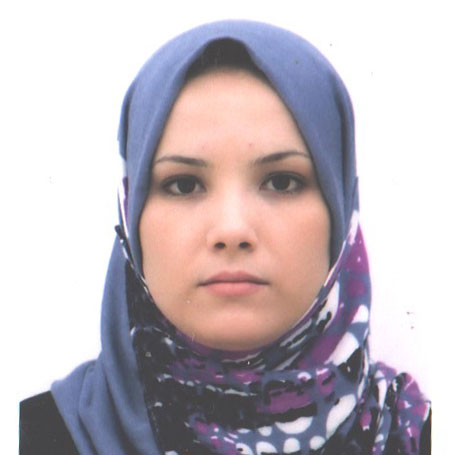
M. BENOUIS Mohamed

MCB

Directory of teachers

Department

Informatics Department

Research Interests

biometric deep learning human behavior

Contact Info

University of M'Sila, Algeria

On the Web:

  • Google Scholar N/A
  • ResearchGate
    ResearchGate N/A
  • ORCID N/A
  • SC
    Scopus N/A

Recent Publications

2024-12-10

Parallel Association Rules Mining Using GPUs and Reptile Search Algorithm

This paper proposes a novel approach to accelerate association rule mining using the Reptile Search Algorithm (RSA) in conjunction with GPU-based parallel processing. Traditional association rule mining techniques can be computationally expensive, especially with large datasets. By utilizing the inherent parallelism of Graphics Processing Units (GPUs), we significantly speed up the fitness evaluation process, a core component of the Reptile Search Algorithm. Our results show a marked improvement in the performance of RSA on large datasets, making it feasible for real-time or large scale applications such as market basket analysis, healthcare for drug interaction analysis, and web usage mining. We also analyze the impact of various GPU optimizations and present a comparison with CPU-based execution.
Citation

M. BENOUIS Mohamed, kameleddine.heraguemi@univ-msila.dz, , (2024-12-10), "Parallel Association Rules Mining Using GPUs and Reptile Search Algorithm", [international] The Sixth International Symposium on Informatics and Its Applications (ISIA) , Université Mohamed Boudiaf M'Sila

2024-06-01

Reptile Search Algorithm for Association Rule Mining

Association rule mining (ARM) is a very popular, engaging, and active research area in data mining. It seeks to find valuable
connections between different attributes in a defined dataset. ARM, which describes it as an NP-complete problem, creates a fertile field
for optimization applications. The Reptile Search Algorithm (RSA) is an innovative evolutionary algorithm. It yanks stimulation from
the encircling and hunting conducts of crocodiles. It is a well-known optimization technique for solving NP-complete issues. Since its
introduction by Abualigah et al. in 2022, the approach has attracted considerable attention from researchers and has extensively been
used to address diverse optimization issues in several disciplines. This is due to its satisfactory execution speed, efficient convergence
rate, and superior effectiveness compared to other widely recognized optimization methods. This paper suggests a new version of the
reptile search algorithm for resolving the association rules mining challenge. Our proposal inherits the trade-off between local and
global search optimization issues demonstrated by the Reptile search algorithm. To illustrate the power of our proposal, a sequence of
experiments is taken out on a varied, well-known, employing multiple comparison criteria. The results show an evident dominance of
the proposed approach in the front of the famous association rules mining algorithms as well as Bees Swarm Optimization (BSO), Bat
Algorithm (BA), Whale Optimization Algorithm (WOA), and others regarding CPU time, fitness criteria, and the quality of generated
rules.
Citation

M. BENOUIS Mohamed, kameleddine.heraguemi@univ-msila.dz, , (2024-06-01), "Reptile Search Algorithm for Association Rule Mining", [national] International Journal of Computing and Digital Systems , University of Bahrain

2024-05-13

Analysis Study of Participant Selection Methods in Federated Learning

To the best of current knowledge, the performance of federated learning predominantly depends on the efficiency of the aggregation server scheme utilized to consolidate model parameters received from distributed local devices. However, in practical scenarios, the global server often faces single-point failures due to four major issues: 1) variations in data distribution settings, such as independent identical distribution (IID) or non-independent identical distribution; 2) communication overhead; 3) limitations in hardware and resource storage availability; and 4) diverse participant participation behaviors. To address the latter concern, limited research has endeavored to establish a correlation between these heterogeneous settings and federated learning performance by analyzing different aspects of participant behavior. Inspired by the absence of a definitive verdict regarding the relationship between the global server and participant behavior, this paper investigates the aspect of participant selection methods and conducts a detailed comparative study among various participant selection methods
Citation

M. BENOUIS Mohamed, brahim.bouderah@univ-msila.dz, , (2024-05-13), "Analysis Study of Participant Selection Methods in Federated Learning", [international] ICEEAC’2024 , Setif university

2023

Artificial Orca Algorithm for Solving University Course Timetabling Issue

Timetabling problems for university courses (UCTP) is one of the most traditional challenges many researchers have emphasized for a long time. This issue belongs to NP-Hard problems, which are hard to solve with classical algorithms due to their complexity. Swarm intelligence has become a trend to solve NP-hard problems and real-life issues. This paper proposes a new-based Artificial Orca Algorithm (AOA) solver for university course timetabling problems. In order to evaluate our proposal, A series of are carried out on Ghardaia University Timetabling data, and the performance of the proposed approach is evaluated and compared with other algorithms developed to solve the same problem. The results show a clear superiority of our proposal over the others in terms of execution time and result in quality.KeywordsUniversity course timetablingArtificial Orca Algorithm (AOA)Metaheuristics
Citation

M. BENOUIS Mohamed, (2023), "Artificial Orca Algorithm for Solving University Course Timetabling Issue", [national] Artificial Intelligence: Theories and Applications , Springer Sham

2019

An Improved Behavioral Biometric System based on Gait and ECG signals

This paper presents multi-modal biometric authentication approach using gait and electrocardiogram (ECG) signals, which can diminish the drawback of unimodal biometric approach as well as to improve authentication system performance. In acquisition phase, data sets are collected from three different databases, ECG-ID, MIT-BIH Arrhythmia database and UCI Machine Learning Repository (Gait). In Feature extraction phase of both signals (ECG and Gait) is performed by using 1D-local binary pattern. Features are obtained by merging two modalities as one feature. In classification approach, three classifiers are developed to classify subjects. K-nearest neighbour (KNN), relying on Euclidean distance, PNN (Probabilistic Neural Network), RBF (Radial Basis Function) and Support Vector Machine (SVM), relying on One-against-all (OAA). The proposed multimodal system has been tested over 18 subjects, and its identification accuracy was about 100%. Our result demonstrate that our approach outperforms rather than unimodal biometric system in terms of Correct Recognition Rate, Equal Error Rate, False Acceptance Rate and False Reject Rate.
Citation

M. BENOUIS Mohamed, (2019), "An Improved Behavioral Biometric System based on Gait and ECG signals", [national] International Journal of Intelligent Engineering and Systems , INASS

Multimodal biometric system for ECG, ear and iris recognition based on local descriptors

Combination of multiple information extracted from different biometric modalities in multimodal biometric recognition system aims to solve the different drawbacks encountered in a unimodal biometric system. Fusion of many biometrics has proposed such as face, fingerprint, iris…etc. Recently, electrocardiograms (ECG) have been used as a new biometric technology in unimodal and multimodal biometric recognition system. ECG provides inherent the characteristic of liveness of a person, making it hard to spoof compared to other biometric techniques. Ear biometrics present a rich and stable source of information over an acceptable period of human life. Iris biometrics have been embedded with different biometric modalities such as fingerprint, face and palm print, because of their higher accuracy and reliability. In this paper, a new multimodal biometric system based ECG-ear-iris biometrics at feature level is proposed. Preprocessing techniques including normalization and segmentation are applied to ECG, ear and iris biometrics. Then, Local texture descriptors, namely 1D-LBP (One D-Local Binary Patterns), Shifted-1D-LBP and 1D-MR-LBP (Multi-Resolution) are used to extract the important features from the ECG signal and convert the ear and iris images to a 1D signals. KNN and RBF are used for matching to classify an unknown user into the genuine or impostor. The developed system is validated using the benchmark ID-ECG and USTB1, USTB2 and AMI ear and CASIA v1 iris databases. The experimental results demonstrate that the proposed approach outperforms unimodal biometric system. A Correct Recognition Rate (CRR) of 100% is achieved with an Equal Error Rate (EER) of 0.5%.
Citation

M. BENOUIS Mohamed, (2019), "Multimodal biometric system for ECG, ear and iris recognition based on local descriptors", [national] Multimed Tools Appl , springer

Behavioural Smoking Identification via Hand-Movement Dynamics

Smoking is a commonly observed habit worldwide, and is a major cause of disease leading to death. Many techniques have been established in medical and psychological science to help people quit smoking. However, the existing systems are complex, and usually expensive. Recently, wearable sensors and mobile application have become an alternative method of improving health. We propose a human behavioural classification based on the use of a one-dimensional local binary pattern (LBP), combined with a Probabilistic Neural Net (PNN) to differentiate the habits of activity as measured in data collected from a wearable device. Human activity signals were recorded from two sets of 6 and 11 participants, using a smart phones equipped with an accelerometer and gyroscope mounted on a wrist module. The data combined structured and naturalistic scenarios. The proposed architecture was compared to previously studied machine learning algorithms and found to out-perform them, exhibiting ceiling level performance.
Citation

M. BENOUIS Mohamed, (2019), "Behavioural Smoking Identification via Hand-Movement Dynamics", [international] The 5th IEEE International Conference on Internet of People (IoP 2019) , leicester, Uk

2018

Shifted 1D-LBP Based ECG Recognition System

ECG analysis has been investigated as promising biometric in many fields especially in medical science and cardiovascular disease for last decades in order to exploit the discriminative capability provided by these liveness measures developing a robust ECG based recognition system. In this paper, an ECG biometric recognition system was proposed based on shifted 1D-LBP. Shifted 1D-LBP was applied to extract the representative non-fiducial features from preprocessed and segmented ECG heartbeats. For matching step, K Nearest Neighbors (KNN) was adopted. Two benchmark databases namely MIT-BIH/Normal Sinus Rhythm and ECG-ID database were used to validate the proposed approach. A Correct Recognition Rate (CRR) of 100% and 97% was achieved with MIT-BIH/Normal Sinus Rhythm and ECG-ID databases, respectively.
Citation

M. BENOUIS Mohamed, (2018), "Shifted 1D-LBP Based ECG Recognition System", [international] https://link.springer.com/book/10.1007/978-3-030-05481-6 , Laghouat, algeria

2017

Gait Recognition Based on Model- Based Methods and Deep Belief Networks

he sensitivity to illumination variations, pose, gender, age, clothing and any another source of changes, can be one of the most important challenges, in gait recognition system. In this paper, we adopt many approaches to extract signatures of human body (static model) using a model-based method, such as static body parameters, ellipse-fitting and robust shape coding. To reduce the dimension of this features set, a principal component analysis (PCA) technique is employed. Then, a deep belief networks classifier is used to classify the gait signatures. The performance of the deep belief network (DBN) is superior to other classifiers such as k-nearest neighbour (KNN) and dynamic times warping (DTW). The comparison is performed for viewpoint changes, clothing and carrying conditions. The proposed approach has been validated on the gait database B.
Citation

M. BENOUIS Mohamed, (2017), "Gait Recognition Based on Model- Based Methods and Deep Belief Networks", [national] International Journal of Biometrics , Inderscience

2015

A Novel Technique For Human Face Recognition Using Fractal Code and Bi-dimensional Subspace

Face recognition is considered as one of the best biometric methods used for human identification and verification; this is because of its unique features that differ from one person to another, and its importance in the security field. This paper proposes an algorithm for face recognition and classification using a system based on WPD, fractal codes and two-dimensional subspace for feature extraction, and Combined Learning Vector Quantization and PNN Classifier as Neural Network approach for classification. This paper presents a new approach for extracted features and face recognition .Fractal codes which are determined by a fractal encoding method are used as feature in this system. Fractal image compression is a relatively recent technique based on the representation of an image by a contractive transform for which the fixed point is close to the original image. Each fractal code consists of five parameters such as corresponding domain coordinates for each range block. Brightness offset and an affine transformation. The proposed approach is tested on ORL and FEI face databases. Experimental results on this database demonstrated the effectiveness of the proposed approach for face recognition with high accuracy compared with previous methods.
Citation

M. BENOUIS Mohamed, (2015), "A Novel Technique For Human Face Recognition Using Fractal Code and Bi-dimensional Subspace", [international] CIIA 2015: Computer Science and Its Applications , Saida, Algeria

2013

Face recognition approach based on two-dimensional subspace analysis and PNN

In this paper, we present an new approach to face recognition based on the combination of feature extraction methods, such as two-dimensional DWT-2DPCA and DWT-2DLDA, with a probabilistic neural networks. The technique 2D-DWT is used to eliminate the illumination, noise and redundancy of a face in order to reduce calculations of the probabilistic neural network operations.
Citation

M. BENOUIS Mohamed, (2013), "Face recognition approach based on two-dimensional subspace analysis and PNN", [national] International Symposium on Programming and Systems (ISPS’2013) , Algeria

← Back to Researchers List