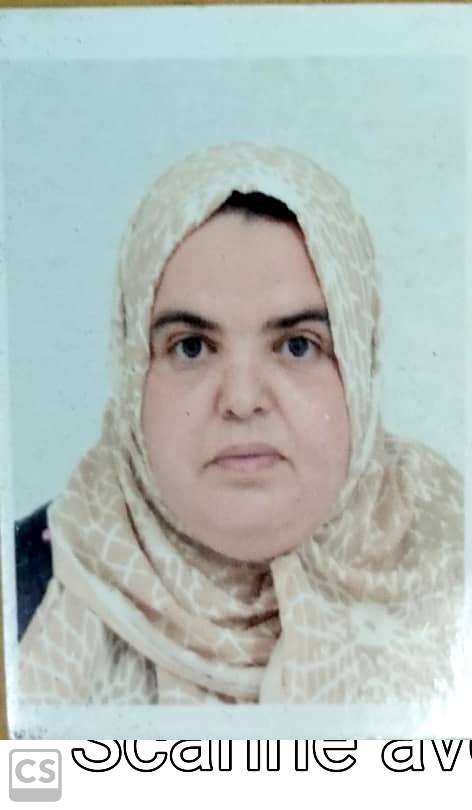
M. BAHACHE Mohamed

MCB

Directory of teachers

Department

Informatics Department

Research Interests

Wireless communication ,WSNs ,WBANs

Contact Info

University of M'Sila, Algeria

On the Web:

  • Google Scholar N/A
  • ResearchGate
    ResearchGate N/A
  • ORCID N/A
  • SC
    Scopus N/A

Recent Publications

2025-01-28

An Efficient ECC-Based Authentication Protocol for Secure RFID Healthcare Applications

As Internet and Communication Technologies (ICT)
evolve, RFID (Radio Frequency Identification) has become essen-
tial in healthcare for efficiently tracking and managing tagged
medical devices. While RFID tags are extensively used on various
healthcare assets, they are exposed to serious security and privacy
risks, such as eavesdropping, data tampering, and interception,
which threaten the confidentiality of healthcare professionals and
patients. Despite the development of multiple lightweight RFID
authentication schemes, many still suffer from vulnerabilities
like replay, impersonation, and de-synchronization attacks. To
address these limitations, we present a robust and efficient
RFID authentication scheme designed specifically for IoT-enabled
healthcare applications. By integrating Elliptic Curve Cryptog-
raphy (ECC), our scheme delivers strong security with a low
computational footprint, ensuring resilience against all evaluated
attack types. Comprehensive security and performance testing
demonstrate that our protocol offers an effective balance of
security and efficiency, making it an ideal and secure choice
for real-time healthcare environments.
Citation

M. BAHACHE Mohamed, (2025-01-28), "An Efficient ECC-Based Authentication Protocol for Secure RFID Healthcare Applications", [international] THE INTERNATIONAL SYMPOSIUM ON INNOVATIVE INFORMATICS OF BISKRA , universite de Biskra

2024-12-10

A new Authentication Protocol for RFID-based healthcare Application

With the rise of Internet and Communication Technologies (ICT), RFID (Radio Frequency Identification) technology has become indispensable in healthcare for tracking and managing tagged medical devices. Widely deployed across numerous healthcare assets, RFID tags face critical security and privacy challenges, as adversaries can eavesdrop, alter, or intercept transmitted data, compromising the confidentiality of healthcare personnel and patients. Although various lightweight RFID authentication schemes have been proposed to address these risks, many remain vulnerable to attacks, including replay, impersonation, and de-synchronization. To overcome these security limitations, we propose a resilient and efficient RFID authentication scheme tailored for IoT-enabled healthcare applications. Leveraging Elliptic Curve Cryptography (ECC) to ensure high security with minimal computational load, our scheme demonstrates strong resistance to all assessed attack vectors. Rigorous security and performance evaluations confirm that our protocol achieves an optimal balance of security and efficiency, positioning it as a practical and secure solution for real-time healthcare environments.
Citation

M. BAHACHE Mohamed, (2024-12-10), "A new Authentication Protocol for RFID-based healthcare Application", [international] ISIA 2024 , Msila

2023-11-06

An Accurate Fault Detection System for Wireless Body Area Networks

Remote health care has become a necessity and an urgent need, because it ensures the patient’s control in a remote manner, especially concerning elderly peoples who
usually suffer from chronic diseases such as diabetes, CVDs, and Parkinson’s, so it has an increasing interest either by industrial companies or academia research, this remote health can be achieved by implanting few internet of medical things or also body sensors on, in or around the patient’s body this is what is called WBANs(Wireless Body Area Networks), these body sensors characterized by their tiny sizes and limited resources (communication, processing or energy), faults is a challenge that must be handled when using or deploying this kind of networks, in this paper we have proposed an approach uses machine learning and exploits the correlation between the vital signs to detect faults in WBANs, the experiment results show that this technique deal better than several other techniques in this literature.
Citation

M. BAHACHE Mohamed, (2023-11-06), "An Accurate Fault Detection System for Wireless Body Area Networks", [national] The 1st National Conference on Electronics, Electrical Engineering, Telecommunications, and Computer Vision , Université de BOUMERDES

2022

Towards an Accurate Faults Detection Approach in Internet of Medical Things Using Advanced Machine Learning Techniques

Remotely monitoring people’s healthcare is still among the most important research topics
for researchers from both industry and academia. In addition, with the Wireless Body Networks
(WBANs) emergence, it becomes possible to supervise patients through an implanted set of body
sensors that can communicate through wireless interfaces. These body sensors are characterized by
their tiny sizes, and limited resources (power, computing, and communication capabilities), which
makes these devices prone to have faults and sensible to be damaged. Thus, it is necessary to
establish an efficient system to detect any fault or anomalies when receiving sensed data. In this
paper, we propose a novel, optimized, and hybrid solution between machine learning and statistical
techniques, for detecting faults in WBANs that do not affect the devices’ resources and functionality.
Experimental results illustrate that our approach can detect unwanted measurement faults with a
high detection accuracy ratio that exceeds the 99.62%, and a low mean absolute error of 0.61%, clearly
outperforming the existing state-of-art solutions.
Citation

M. BAHACHE Mohamed, Abdou El Karim Tahari, Jorge Herrera-Tapia, Nasreddine Lagraa, Carlos Tavares Calafate, Chaker Abdelaziz Kerrache, , (2022), "Towards an Accurate Faults Detection Approach in Internet of Medical Things Using Advanced Machine Learning Techniques", [national] Sensor-mdpi , MDPI

2021

Machine Learning Against Statistics to Detect Faults in WBANs(Wireless Body Area Networks) in Healthcare

The WBAN (Wireless Body Area Network), is a
subset of WSN (Wireless Sensor Network), where the fusion
between, sensing, pervasive computing, intelligent information
processing, and wireless communication is used, healthcare is one
of the most important application domains, where a numbered
body sensor nodes implanted on, in or around the Hyman
body to supervise their vital signs, the limited software and
hardware resources lets these body sensor nodes, exposed to
faults, statistics, and machine learning techniques are a good
choice for fault handling in WBANs, in this paper, we aim to
achieve an efficiency comparison between these two techniques.
Citation

M. BAHACHE Mohamed, Abdou El Karim Tahari, Nasreddine Lagraa, Chaker Abdelaziz Kerrache, , (2021), "Machine Learning Against Statistics to Detect Faults in WBANs(Wireless Body Area Networks) in Healthcare", [national] NCN2021 The 1st National Conference on recent advances in Networking and Computing Centre universitaire AFLOU-Laghouat-Algerie. , Aflou

2020

An Inclusive Survey of Contactless Wireless Sensing: A Technology Used for Remotely Monitoring Vital Signs Has the Potential to Combating COVID-19

With the Coronavirus pandemic showing no signs of abating, companies and governments
around the world are spending millions of dollars to develop contactless sensor technologies that minimize
the need for physical interactions between the patient and healthcare providers. As a result, healthcare
research studies are rapidly progressing towards discovering innovative contactless technologies, especially
for infants and elderly people who are suffering from chronic diseases that require continuous, real-time
control, and monitoring. The fusion between sensing technology and wireless communication has emerged
as a strong research candidate choice because wearing sensor devices is not desirable by patients as they
cause anxiety and discomfort. Furthermore, physical contact exacerbates the spread of contagious diseases
which may lead to catastrophic consequences. For this reason, research has gone towards sensor-less
or contactless technology, through sending wireless signals, then analyzing and processing the reflected
signals using special techniques such as frequency modulated continuous wave (FMCW) or channel state
information (CSI). Therefore, it becomes easy to monitor and measure the subject’s vital signs remotely
without physical contact or asking them to wear sensor devices. In this paper, we overview and explore
state-of-the-art research in the field of contactless sensor technology in medicine, where we explain,
summarize, and classify a plethora of contactless sensor technologies and techniques with the highest impact
on contactless healthcare. Moreover, we overview the enabling hardware technologies as well as discuss the
main challenges faced by these systems.
Citation

M. BAHACHE Mohamed, JOEL P LEMAYIAN, WENJIN WANG, JEHAD HAMAMREH, , (2020), "An Inclusive Survey of Contactless Wireless Sensing: A Technology Used for Remotely Monitoring Vital Signs Has the Potential to Combating COVID-19", [national] RS Open Journal on Innovative Communication Technologies , RESEARCH STORE

2014

Data Gathering Protocol For Wireless Sensor Networks with Mobile Node

Wireless sensor networks WSNs are emerging as a new paradigm which is used for a wide range of applications. The traditional architectures of WSN consist of a set of static nodes
which are deployed over a geographical area in order to collect data. One of the major challenges in WSNs is the energy usage that has also a large influence on the lifetime of the network. Recently, a new WSN architecture based on mobile elements (MEs) has been proposed which introduces MEs to gather data from static sensors. In this paper, we propose a new cluster-based data gathering protocol in WSN-ME. To define the MEs path, we divide the network into several groups of sensors. Then, the ME visits the center of gravity of each group to collect data from static sensors.
Citation

M. BAHACHE Mohamed, (2014), "Data Gathering Protocol For Wireless Sensor Networks with Mobile Node", [international] ISIA2014 , Université de M"sila

← Back to Researchers List