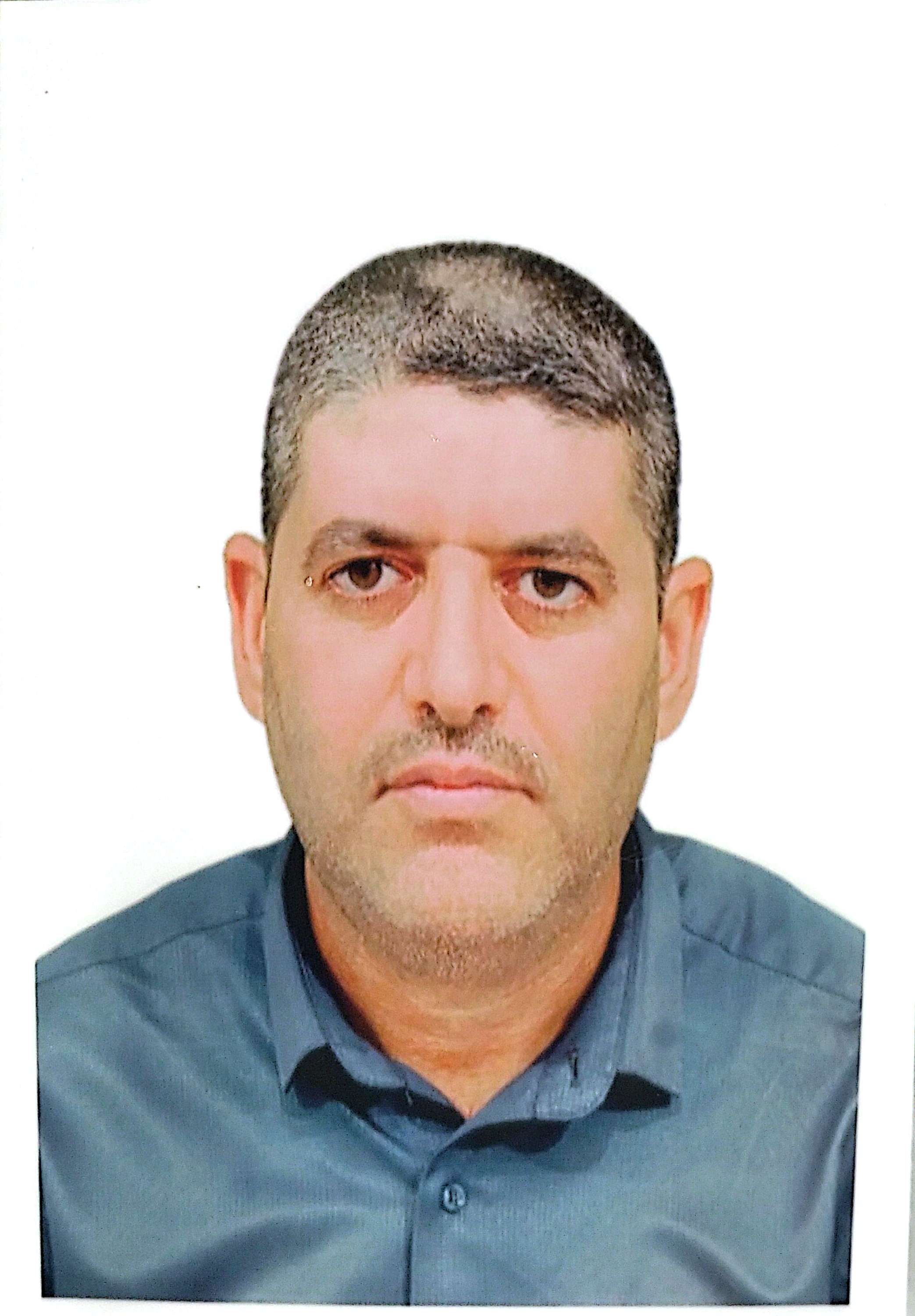
M. SAHED Bachir

MCA

Directory of teachers

Department

Department of Letters and English Language

Research Interests

APPLIED LINGUISTICS AND LITERATURE (ENGLISH LANGUAGE AND LITERATURE)

Contact Info

University of M'Sila, Algeria

On the Web:

  • Google Scholar N/A
  • ResearchGate
    ResearchGate N/A
  • ORCID N/A
  • SC
    Scopus N/A

Recent Publications

2025-01-25

MEDICAL ENGLISH WORKSHOP

MEDICAL ENGLISH WORKSHOP
Citation

M. SAHED Bachir, (2025-01-25), "MEDICAL ENGLISH WORKSHOP", [national] MEDICAL ENGLISH WORKSHOP , The University of Continuing Education

2024-12-05

Enhancing EFL Pedagogy through Digital Storytelling

Enhancing EFL Pedagogy through Digital Storytelling
Citation

M. SAHED Bachir, (2024-12-05), "Enhancing EFL Pedagogy through Digital Storytelling", [national] Unlocking EFL Potential: Research of Effective Teaching Practices , Department of English, University of M'sila

2024-06-22

YOUNG RESEARCHERS IN NEED OF THESIS

YOUNG RESEARCHERS IN NEED OF THESIS
Citation

M. SAHED Bachir, (2024-06-22), "YOUNG RESEARCHERS IN NEED OF THESIS", [national] YOUNG RESEARCHERS IN NEED OF THESIS , University of M'sila

2024-04-27

The Creation of the Educational Video

The Creation of the Educational Video
Citation

M. SAHED Bachir, (2024-04-27), "The Creation of the Educational Video", [national] The Creation of the Educational Video , The University of Continuing Education

2023-12-17

“Mapping Decolonization through the (M)other Tongue in Ngugi wa Thiong’o’s Devil on the Cross”

This study explores the theme of decolonization in Ngugi wa Thiong’o’s novel Devil on the Cross by focusing on the protagonist's journey of reclaiming cultural identity through the (M)other tongue. Employing a postcolonial approach, the research examines how language becomes a powerful tool for resistance and decolonization, allowing characters to challenge oppressive systems. The study aims to map the intricate relationship between language, identity, and decolonization in Ngugi’s work, shedding light on the transformative potential of embracing the (M)other tongue as a means of cultural liberation.
Keywords: decolonization; Devil on the Cross; identity; language; thought
Citation

M. SAHED Bachir, (2023-12-17), "“Mapping Decolonization through the (M)other Tongue in Ngugi wa Thiong’o’s Devil on the Cross”", [national] Enseignement-apprentissage des Langues Etrangéres par la langue maternelle , University of M’sila

“A Clear Line of Thought: The Art of Structuring Literary Research Papers”

This study explores the essential components and strategies involved in crafting a well-structured literary research paper. The research delves into the meticulous planning, organization, and presentation of ideas that contribute to the coherence and effectiveness of academic writing in the field of literary studies. By examining key principles and methodologies, the study aims to provide valuable insights for scholars and students seeking to enhance the clarity and impact of their literary research papers.
Citation

M. SAHED Bachir, (2023-12-17), "“A Clear Line of Thought: The Art of Structuring Literary Research Papers”", [national] Algerian Scientific Publication and Peer Review: Status Quo and Future Directions , University of M’sila

2023-12-13

“Teaching Literature through Blended Learning: The Case of Third Year EFL Students at M’sila University”

This study investigates the integration of blended learning in the teaching of literature, specifically focusing on third-year EFL students at M'sila University. By examining the application of blended learning methodologies in literature instruction, the research aims to assess its effectiveness, impact on student engagement, and the overall enhancement of learning outcomes in the context of EFL education. The findings of this study contribute valuable insights to the ongoing discourse on innovative pedagogical approaches, particularly within the domain of literature instruction in tertiary education.
Citation

M. SAHED Bachir, (2023-12-13), "“Teaching Literature through Blended Learning: The Case of Third Year EFL Students at M’sila University”", [national] L’enseignement alterné: Étude d’actions didactiques à caractère hybride proposées aux étudiants de la faculté des lettres et langues , University of M’sila

2023-11-20

“Identity Crisis in Chinua Achebe’s Arrow of God and Anthills of the Savannah”

This study delves into the thematic exploration of identity crisis in Chinua Achebe’s Arrow of God and Anthills of the Savannah. It examines how the protagonists in both novels grapple with the complexities of their individual identities within the context of colonial and post-colonial Nigeria. The analysis highlights the impact of cultural, religious, and political forces on their sense of self, as they navigate a changing African landscape. Drawing on the postcolonial discourse theory, the study elucidates the characters’ internal struggles and external conflicts that arise from their attempts to reconcile tradition with modernity. Furthermore, it underscores the broader implications of identity crisis in the context of nation-building and decolonization. In conclusion, this research sheds light on the profound existential dilemmas faced by the characters, offering valuable insights into the broader discourse on identity and self-discovery in post-colonial African literature.
Keywords: Chinua Achebe; cultural displacement; decolonization; identity crisis; postcolonial discourse theory
Citation

M. SAHED Bachir, (2023-11-20), "“Identity Crisis in Chinua Achebe’s Arrow of God and Anthills of the Savannah”", [international] Shaping Identities in Literary and Translated Texts , University of Saida, Algeria

2023-11-18

“Avoiding Plagiarism and Mastering the Art of Citation”

Avoiding Plagiarism and Mastering the Art of Citation
Citation

M. SAHED Bachir, (2023-11-18), "“Avoiding Plagiarism and Mastering the Art of Citation”", [national] Ethical Research and Evaluation , University of M’sila

2023-11-03

Catalyst Conference

Catalyst Conference
Citation

M. SAHED Bachir, (2023-11-03), "Catalyst Conference", [national] Catalyst Conference , Catalyst Institute, Bordj Bou Arreridj

2023-10-23

British Literature: A Guide to First Year Master’s Students

This booklet has been carefully crafted with the aim of providing you, our first-year Master’s students, with a comprehensive and insightful exploration of key literary works in the British literary tradition. Our primary focus will be on the analysis of three seminal texts: Hamlet, Frankenstein, and British Romantic Poetry.
Citation

M. SAHED Bachir, (2023-10-23), "British Literature: A Guide to First Year Master’s Students", [national] University of M'sila

Introduction to Literary Text: A Guide to Second Year Students

The primary objective of the booklet "Introduction to Literary Text: A Guide for L2 Students" is to equip second-year LMD students of English, specifically enrolled in the Literary Text module, with the necessary tools and insights to proficiently analyse and comprehend a diverse range of literary works from different periods of British literature. The booklet aims to foster a deep understanding of the texts, enabling students to effectively connect them with their historical, cultural, and societal contexts.
Citation

M. SAHED Bachir, (2023-10-23), "Introduction to Literary Text: A Guide to Second Year Students", [national] University of M'sila

2023-10-17

“Cultural Displacement in V.S. Naipaul’s The Mimic Men”

“Cultural Displacement in V.S. Naipaul’s The Mimic Men”
Citation

M. SAHED Bachir, (2023-10-17), "“Cultural Displacement in V.S. Naipaul’s The Mimic Men”", [national] English Literature , University of Constantine 1

2023-10-03

“The Role of English in Bridging the Digital Divide and in Enhancing Cross-Cultural Communication in the Arab World: Algeria as a Case Study”

This study explores the pivotal role of the English language in Algeria, not only as a linguistic tool but as a catalyst for bridging the digital divide and fostering cross-cultural communication. As Algeria navigates the challenges of an increasingly digital world, understanding the significance of English proficiency becomes paramount. This research delves into how English proficiency correlates with digital access, literacy, and communication across cultures, shedding light on the potential of the language as a bridge to technological advancements and global connectivity. The findings contribute to discussions on language policies, educational strategies, and the role of English in shaping Algeria's place in the digital age.
Citation

M. SAHED Bachir, (2023-10-03), "“The Role of English in Bridging the Digital Divide and in Enhancing Cross-Cultural Communication in the Arab World: Algeria as a Case Study”", [international] Arabic Language and the Digital Gap in the Arab World , University of Bordj Bou Arreridj, Algeria

2023-10-01

“Heart of Modernism: Unveiling Joseph Conrad’s Influence”

The present study delves into the profound influence of Joseph Conrad’s iconic work, Heart of Darkness, on the emergence of Modernism in the art of writing fiction. By closely examining Conrad’s masterful storytelling techniques, this study uncovers the pivotal role the novella played in shaping the trajectory of literary Modernism during the late 19thand early 20thcenturies. Through a stylistic analysis, the study explores Conrad's adept use of impressionism and symbolism, unveiling how the principles of these artistic movements contributed to the novel’s depth and complexity. By shedding light on Conrad’s narrative innovations, this research uncovers the visionary methods that continue to resonate with modern writers and
readers alike. Fundamentally, the study offers an illuminating exploration of Joseph Conrad’s enduring influence and his enduring legacy in the world of literature.
Citation

M. SAHED Bachir, (2023-10-01), "“Heart of Modernism: Unveiling Joseph Conrad’s Influence”", [national] دفاتر مخبر الشعرية الجزائرية , دفاتر مخبر الشعرية الجزائرية

2023-09-27

“Mysticism and the Divine Love in the Works of the Arab Andalusian Scholar Ibn Arabi and the Mystic Persian Poet Jalad Al-Din Rumi”

This study explores the profound themes of mysticism and divine love in the writings of two influential figures: the Arab Andalusian scholar Ibn Arabi and the Persian mystic poet Jalal Ad-Din Rumi. It delves into their distinctive approaches to spiritual enlightenment, shedding light on how they articulate the transformative power of love in the context of their respective cultural backgrounds, leaving an indelible mark on the world of mystical philosophy and poetry.
Keywords: Mysticism; divine love; Ibn Arabi; Jalal Ad-Din Rumi; Comparative Analysis
Citation

M. SAHED Bachir, (2023-09-27), "“Mysticism and the Divine Love in the Works of the Arab Andalusian Scholar Ibn Arabi and the Mystic Persian Poet Jalad Al-Din Rumi”", [international] Islamic Mysticism in Al-Andalus: Knowledge, Symbolism, and Metaphor , University of Murcia, Spain

2023-09-15

Introduction to Postcolonial Discourse Theory: An Analysis of African and Caribbean Literature

In the realm of academia, the pursuit of knowledge often takes us on journeys through diverse and multifaceted landscapes of thought. In Introduction to Postcolonial Discourse Theory: An Analysis of African and Caribbean Literature, we embark on a compelling expedition into the complex and illuminating terrain of postcolonial studies. This book serves as both a compass and a torch, guiding readers through the intricacies of postcolonial theory and its profound implications for understanding our world.
Citation

M. SAHED Bachir, (2023-09-15), "Introduction to Postcolonial Discourse Theory: An Analysis of African and Caribbean Literature", [national] , Editions Khayal

2023-06-08

“The Importance of English Language, Translation, and Artificial Intelligence”

The Importance of English Language, Translation, and Artificial Intelligence
Citation

M. SAHED Bachir, (2023-06-08), "“The Importance of English Language, Translation, and Artificial Intelligence”", [national] Scientific Research and Artificial Intelligence: Prospects and Challenges , University of Setif 2

2023-05-20

“Master-ing the Art of Writing a Statement of Purpose: Empowering Second Year Master’s Students”

Master-ing the Art of Writing a Statement of Purpose: Empowering Second Year Master’s Students
Citation

M. SAHED Bachir, (2023-05-20), "“Master-ing the Art of Writing a Statement of Purpose: Empowering Second Year Master’s Students”", [national] My First and Final Steps in the Master Dissertation , University of Batna 2

2023-04-26

“Conrad and Naipaul: Postcolonial Journeys into Darkness”

The present article attempts to examine the shared affinities between Conrad and Naipaul. Conrad and Naipaul share a sense of cultural dislocation which manifests itself in formal and thematic levels in their fiction. Naipaul shares with Conrad some characteristics, including education, work, and a disappointed feeling with London. Thus, the question of how to read Naipaul’s characters divided the critics, viewing him, for example, as an alternative ego for Conrad. In The Mimic Men, Singh clearly shares his point of view of the world’s ‘half-made’ societies.
Keywords: form and theme; place and displacement; postcolonial intertexts; the degradation of the idea; The Mimic Men
Citation

M. SAHED Bachir, (2023-04-26), "“Conrad and Naipaul: Postcolonial Journeys into Darkness”", [national] Borders/Crossing Borders in Contemporary Literature and Culture , University of M’sila

2023-03-05

Is ChatGPT a Friend or a Foe for a Teacher?

Is ChatGPT a Friend or a Foe for a Teacher?
Citation

M. SAHED Bachir, (2023-03-05), "Is ChatGPT a Friend or a Foe for a Teacher?", [national] Is ChatGPT a Friend or a Foe for a Teacher? , University of M’sila

2023-02-08

“At the Stairwell of Cultures: Mimicry and Hybridity in V.S. Naipaul’s The Mimic Men”

The present study examines the issue of Mimicry and Hybridity in V.S. Naipaul’s The Mimic Men (1967). The novel dramatizes Ralph Singh’s cultural displacement and identity (de)formation. Throughout the novel, Singh is described as being torn between the worlds of his Caribbean and Asian origin, as well as European modernity. Hence, the study scrutinises the anxiety of belonging stressing ideas of hybridity and mimicry. It endeavours to investigate Singh’s quest for identity in the light of Homi Bhabha’s theories of mimicry and hybridity. With a special focus on Homi Bhabha’s notion of Third Space, the study analyses the impact of the host culture on the protagonist’s identity. It maintains that despite the fact that Singh’s cultural identity blends with the Western by having a western education and an English wife, he is never considered same.
Keywords: hybridity; mimicry; Ralph Singh; The Mimic Men; Third Space
Citation

M. SAHED Bachir, (2023-02-08), "“At the Stairwell of Cultures: Mimicry and Hybridity in V.S. Naipaul’s The Mimic Men”", [national] Transcultural Identities in Modern Literature , University of Batna 2

2023-02-06

“Narrating Cultural Displacement in Chinua Achebe’s No Longer at Ease and V.S. Naipaul’s The Mimic Man”

The present study delves into the nuanced exploration of cultural displacement in Chinua Achebe’s No Longer at Ease and V.S. Naipaul’s The Mimic Man. Through a comparative analysis of these seminal works, the research illuminates the ways in which the protagonists navigate the complex terrain of cultural identity, grappling with the impact of colonialism and the clash between tradition and modernity. By examining the characters’ experiences of displacement and the ensuing identity crises, the study offers profound insights into the broader themes of post-colonial literature and the intricacies of cultural adaptation and assimilation.
Keywords: alienation; cultural displacement; No Longer at Ease; postcolonial literature; The Mimic Man
Citation

M. SAHED Bachir, (2023-02-06), "“Narrating Cultural Displacement in Chinua Achebe’s No Longer at Ease and V.S. Naipaul’s The Mimic Man”", [national] Otherness and Dialogism in Postcolonial Literature , University of M’sila

2023-01-29

“Critical Thinking and Cultural Awareness in the EFL Classroom: Knowing Your Learners”

This study delves into the integration of critical thinking skills and cultural awareness in the EFL classroom, emphasizing the importance of understanding learners' cultural backgrounds. Recognizing that effective language teaching extends beyond linguistic proficiency, the research explores strategies to foster critical thinking and cultural sensitivity among EFL students. By "knowing learners," educators can tailor instructional approaches that not only enhance language acquisition but also promote a deeper understanding of diverse perspectives, fostering a more inclusive and globally aware learning environment. This abstract provides a concise overview of the study's focus on the intersection of critical thinking, cultural awareness, and personalized teaching in the EFL context.
Citation

M. SAHED Bachir, (2023-01-29), "“Critical Thinking and Cultural Awareness in the EFL Classroom: Knowing Your Learners”", [national] Towards the Improvement of EFL Master Students’ Academic Reading and Writing via Critical Thinking , University of M’sila

2023

Critical Thinking and Cultural Awareness in the EFL Classroom: Knowing your Learners

Critical Thinking and Cultural Awareness in the EFL Classroom: Knowing your Learners
Citation

M. SAHED Bachir, (2023), "Critical Thinking and Cultural Awareness in the EFL Classroom: Knowing your Learners", [national] Towards the Improvement of EFL master students academic reading and writing via critical thinking , Mohammed Boudiaf University of M’sila, Algeria

Narrating Cultural Displacement in Achebe's No Longer at Ease and Naipaul's The Mimic Men

Narrating Cultural Displacement in Achebe's No Longer at Ease and Naipaul's The Mimic Men
Citation

M. SAHED Bachir, (2023), "Narrating Cultural Displacement in Achebe's No Longer at Ease and Naipaul's The Mimic Men", [national] Otherness and Dialogism in Postcolonial Literature , Mohammed Boudiaf University of M’sila, Algeria

Mimicry and Hybridity in V.S. Naipaul's The Mimic Men

The present study examines the issue of Mimicry and Hybridity in V.S. Naipaul’s The
Mimic Men (1967). The novel dramatizes Ralph Singh’s cultural displacement and
identity (de)formation. Throughout the novel, Singh is described as being torn
between the worlds of his Caribbean and Asian origin, as well as European
modernity. Hence, the study scrutinises the anxiety of belonging stressing ideas of
hybridity and mimicry. It endeavours to investigate Singh’s quest for identity in the
light of Homi Bhabha’s theories of mimicry and hybridity. With a special focus on
Homi Bhabha’s notion of Third Space, the study analyses the impact of the host
culture on the protagonist’s identity. It maintains that despite the fact that Singh’s
cultural identity blends with the Western by having a western education and an
English wife, he is never considered same.
Keywords: hybridity; mimicry; Ralph Singh; The Mimic Men; Third Space
Citation

M. SAHED Bachir, (2023), "Mimicry and Hybridity in V.S. Naipaul's The Mimic Men", [national] Transcultural Identities in Modern Literature , University of Batna 2

2022-12-14

“Algerian Dialect and Identity in Ahlem Mosteghanemi’s The Bridges of Constantine”

The present study examines the use of the Algerian dialect as an identity marker in Ahlem Mosteghanemi’s The Bridges of Constantine. The story recounts Khaled’s encounter with and passion for Hayet, as well as his disappointment with the state of corruption that prevails in the country he once fought for during the Algerian Revolution. Throughout the novel, Mosteghanemi employs the Algerian dialect to emphasise the sociolinguistic functions of codeswitching between Standard Arabic and Dialectal Arabic in Algeria. Besides, the use of the Algerian dialect adds to realism in the novel. Therefore, examining the role of the dialect as a marker of identity in Mosteghanemi’s The Bridges of Constantine is taken as a focal point in the study to scrutinise the politics of language in the novel.
Keywords: Standard Arabic, bidialectal codeswitching, identity, Algerian Dialectal Arabic, realism, The Bridges of Constantine
Citation

M. SAHED Bachir, (2022-12-14), "“Algerian Dialect and Identity in Ahlem Mosteghanemi’s The Bridges of Constantine”", [international] Thought and Literature in Arabic Literature , University of Valencia, Spain

2022-05-16

Halima Hermouche: The Mary Shelley of Her Time

Halima Hermouche: The Mary Shelley of Her Time
Citation

M. SAHED Bachir, (2022-05-16), "Halima Hermouche: The Mary Shelley of Her Time", [national] Discussing Hermouche's Novel , Bordj Bou Arreridj Public Library

2022

OPEN Community Leader - Digital Leadership

OPEN Community Leader - Digital Leadership
Citation

M. SAHED Bachir, (2022), "OPEN Community Leader - Digital Leadership", [international] OPEN Community of Practice , USA

Integrating Critical Thinking Skills into the Exploration of Culture in an EFL Setting

Integrating Critical Thinking Skills into the Exploration of Culture in an EFL Setting
Citation

M. SAHED Bachir, (2022), "Integrating Critical Thinking Skills into the Exploration of Culture in an EFL Setting", [international] Online Course , USA

DECOLONIZING THE MIND: POST-COLONIAL DISCOURSE IN THE SELECTED WORKS OF CHINUA ACHEBE, NGUGI WA THIONG’O AND V.S. NAIPAUL

This doctoral thesis investigates the issues of identity and writing back to Eurocentric discourse through the selected works of African and Caribbean writers, namely Chinua Achebe’s Arrow of God (1964) and Anthills of the Savannah (1987), Ngugi wa Thiong’o’s Petals of Blood (1977) and Devil on the Cross (1980), and V.S. Naipaul’s The Mimic Men (1967). While colonial discourse stands in favour of the values, assumptions, and habits of the colonizer at the expense of those of the colonized, writers like Achebe and Ngugi stress the necessity of creating a different historiography by contesting the representations of Africa and Africans. Besides, V.S. Naipaul narrates the scepticism and fragmentation ensuing from the wreckage of colonialism in such a way that depicts the ambivalence of postcolonial subjects striving to construct an identity. Thus, the present research aims at unveiling the ways in which the works under scrutiny contribute to a rewriting of an African and Caribbean historiography, and to an understanding of postcolonial identity. To achieve this end, the research employs the postcolonial approach which helps to answer a plethora of questions concerning cross-cultural encounters and the conflicting power relations throughout and beyond the colonial experience. As such, the selected works are analysed in the light of the ideas and theories of Franz Fanon, Edward Said, Homi K. Bhabha, and Gayatri Spivak. The findings show that despite their different views about the complex notions of culture, language, history, and identity, these writers have set out to dismantle the Manichean structures of power between the colonizer and the colonized and to offer ways of contesting colonial discourse and the constructions of otherness and stereotyping.
Keywords: Achebe; decolonization; Eurocentrism; identity (de)formation; Postcolonial discourse; Naipaul; Ngugi
Citation

M. SAHED Bachir, (2022), "DECOLONIZING THE MIND: POST-COLONIAL DISCOURSE IN THE SELECTED WORKS OF CHINUA ACHEBE, NGUGI WA THIONG’O AND V.S. NAIPAUL", [national] ABOUBEKR BELKAID UNIVERSITY OF TLEMCEN

Mapping Decolonization through the Mother Tongue in Ngugi's Devil on the Cross

Mapping Decolonization through the Mother Tongue in Ngugi's Devil on the Cross
Citation

M. SAHED Bachir, (2022), "Mapping Decolonization through the Mother Tongue in Ngugi's Devil on the Cross", [national] Teaching/Learning of Foreign Languages through the Mother Tongue , Mohammed Boudiaf University of M’sila, Algeria

Algerian Dialect and Identity in Ahlem Mosteghanemi’s The Bridges of Constantine

Algerian Dialect and Identity in Ahlem Mosteghanemi’s The Bridges of Constantine

اللهجة الجزائرية والهوية في رواية «ذاكرة الجسد» لأحلام مستغانمي
The present study examines the use of the Algerian dialect as an identity marker in Ahlem
Mosteghanemi’s The Bridges of Constantine. The story recounts Khaled’s encounter with and
passion for Hayet, as well as his disappointment with the state of corruption that prevails in the
country he once fought for during the Algerian Revolution. Throughout the novel,
Mosteghanemi employs the Algerian dialect to emphasise the sociolinguistic functions of
codeswitching between Standard Arabic and Dialectal Arabic in Algeria. Besides, the use of
the Algerian dialect adds to realism in the novel. Therefore, examining the role of the dialect as
a marker of identity in Mosteghanemi’s The Bridges of Constantine is taken as a focal point in
the study to scrutinise the politics of language in the novel.

Keywords: Standard Arabic, bidialectal codeswitching, identity, Algerian Dialectal Arabic,
realism, The Bridges of Constantine
Citation

M. SAHED Bachir, (2022), "Algerian Dialect and Identity in Ahlem Mosteghanemi’s The Bridges of Constantine", [international] El Simposio Internacional online "Pensamiento y literatura en lengua árabe" , Universidad de Valencia, Spain

V.S. Naipaul: The Art of Betrayal

The Mimic Men dramatizes the socio-historical effects of colonialism in Trinidad. It focuses on the plight of Ralph Singh’s in the postcolony and in the Metropolitan city of London, the place of his exile. It deals with many questions and themes which are related to cultural survival and identity formation as interwoven with issues of race, class, ethnicity, and nation. Naipaul has recently told Patrick French, his biographer, that The Mimic Men was an important book for the cultural emptiness in colonial people. But it is very dry. This confession highlights the importance of novel in dealing with the cultural predicament of colonial people.
Citation

M. SAHED Bachir, (2022), "V.S. Naipaul: The Art of Betrayal", [national] The First National Conference on Culture and the Politics of Language in Postcolonial Literature , Mohammed Boudiaf University of M’sila, Algeria

Project Work and Creative Thinking Skills in the EFL Classroom

Current trends to English language teaching and learning advocate the use of the project work as a pedagogical task to foster the 21st century learner’s creativity. The present study scrutinizes the role of the project work in enhancing learner’s creative thinking skills in the Algerian EFL classroom. A project work analysis is used as a tool to examine learners’ creative thinking skills. Project work analysis comprises of the observation and the analysis of first year Tarek Ibn Ziad secondary school-Constantine learners’ projects using an observation grid. The findings reveal that the learners were highly creative in processing information and generating ideas and solutions.
Keywords: The project work; Creative thinking skills; EFL; Secondary education
Citation

M. SAHED Bachir, (2022), "Project Work and Creative Thinking Skills in the EFL Classroom", [national] FORUM DE L' ENSEIGNANT منتدى الأستاذ , FORUM DE L' ENSEIGNANT

2021

Modern Linguistics Webinar

Modern Linguistics Webinar
Citation

M. SAHED Bachir, (2021), "Modern Linguistics Webinar", [international] Modern Linguistics Webinar , Online

TEACHING ENGLISH: HOW TO PLAN A GREAT LESSON

TEACHING ENGLISH: HOW TO PLAN A GREAT LESSON
Citation

M. SAHED Bachir, (2021), "TEACHING ENGLISH: HOW TO PLAN A GREAT LESSON", [international] Online Course , British Council

SHAKESPEARE: CONTEXT AND STAGECRAFT

SHAKESPEARE: CONTEXT AND STAGECRAFT
Citation

M. SAHED Bachir, (2021), "SHAKESPEARE: CONTEXT AND STAGECRAFT", [international] Online Course , King's College, London

The Dilemma of Belonging and the Burden of Englishness in Chinua Achebe’s No Longer at Ease

The present article examines the issue of cultural identity in Chinua Achebe’s No Longer at Ease (1960). The novel dramatizes Obi Okonkwo’s cultural displacement and identity (de)formation on the eve of Nigerian independence. Throughout the novel, Obi is described as being torn between the two worlds of African tradition and European modernity. Hence, the paper aims at highlighting Obi’s struggle to function properly within the emerging cultural forces of the 1950s in Nigeria. It scrutinises the anxiety of belonging in postcolonial African literature stressing ideas of displacement, alienation, and identity (de)formation. It endeavours to investigate Obi’s alienation and quest for identity in the light of Frantz Fanon’s ideas on identity and national culture as well as Homi Bhabha’s theories of hybridity. With a special focus on the work of Frantz Fanon, namely alienation and cultural stereotyping, as well as Homi Bhabha’s notion of Third Space, the article analyses the impact of the colonial culture on the protagonist. It maintains that Obi’s traditional Umuofian beliefs and his English education, combined with the aspects of life in the modern city of Lagos, create his cultural and linguistic ambivalence.
Keywords: cultural displacement, cultural ambivalence, identity (de)formation, No Longer at Ease, the dilemma of belonging, Third Space
Citation

M. SAHED Bachir, (2021), "The Dilemma of Belonging and the Burden of Englishness in Chinua Achebe’s No Longer at Ease", [national] مجلة الجامع في الدراسات النفسية والعلوم التربوية , Al-Jamie Journal

2020-09-12

تربص المسرح

تربص المسرح
Citation

M. SAHED Bachir, (2020-09-12), "تربص المسرح", [national] تربص المسرح , جمعية نوميديا

2018

The Project Work as a Pedagogical Task to Enhance Learners’ Critical Thinking

Current trends to English language teaching and learning advocate the use of the project work as a pedagogical task to foster the 21st century learner’s critical thinking skills. The present study scrutinizes the role of the project work in enhancing learner’s critical thinking skills in the Algerian EFL classroom. A project work analysis is used as a tool to examine learners’ critical thinking skills. Project work analysis comprises of the observation and the analysis of first year Tarek Ibn Ziad secondary school-Constantine learners’ projects using an observation grid. The findings reveal that the learners were highly critical in processing information and generating ideas and solutions.
Keywords: The project work; Critical thinking skills; EFL; Secondary education
Citation

M. SAHED Bachir, (2018), "The Project Work as a Pedagogical Task to Enhance Learners’ Critical Thinking", [international] The First International ELT Conference , Larbi Tebessi University of Tebessa, Algeria

2017-11-06

Poetry Competition

Poetry Competition
Citation

M. SAHED Bachir, (2017-11-06), "Poetry Competition", [national] Poetry Competition , University of Bordj Bou Arreridj, Algeria

2017

Teaching Pronunciation for English as a Lingua Franca (ELF)

Teaching Pronunciation for English as a Lingua Franca (ELF)
Citation

M. SAHED Bachir, (2017), "Teaching Pronunciation for English as a Lingua Franca (ELF)", [international] Teaching Pronunciation for English as a Lingua Franca (ELF) , UK

Literature Against Itself: The Power(lessness) of the Word in Conrad’s Heart of Darkness

Joseph Conrad’s Heart of Darkness is considered one of the most contentious
novels of the modern era. Readers and critics seem not to agree on the ultimate
meaning of Conrad’s novella. Indeed, the meaning of Marlow’s account of his
experiences in the wilderness is obscured by his impressionistic, hazy and hypnotic
narrative style. Hence, the purpose of the present research is to examine the power of the word in
Conrad’s Heart of Darkness. It analyses Conrad’s narrative discourse in his 1899
novella. Thus, the first chapter presents the socio-historical context of the work. It
casts light on the effects of Conrad’s childhood experiences, the fin de siècle temper
as well as the literary context on the shaping of Conrad’s sceptical temperament. The
second chapter scrutinises the different narrative techniques and stylistic devices. It
investigates Conrad’s adoption of the frame narrative voice, the impressionistic
technique of the delayed decoding, the art(ifice) of covert plots, janiformity and the
paradox of the virtue of evil, the Faustian narrative, the haunting doppelgänger,
transtextuality, symbolism, irony, free indirect discourse, appositions and
substitutions as well as words of estrangement. The third chapter discusses
critical responses to Heart of Darkness. It uses the deconstructivist approach to
literary criticism to highlight the novella’s undecidability and indeterminacy.
As a result, we conclude that Heart of Darkness is much more than just a story
about a voyage up the river. It is an exploration of good and evil, light and darkness,
black and white, sanity and insanity. It is above all about the essential hollowness at
the core of humanity and language.
Citation

M. SAHED Bachir, (2017), "Literature Against Itself: The Power(lessness) of the Word in Conrad’s Heart of Darkness", [national] The First National Literary Criticism Study Day , Mohammed Boudiaf University of M’sila, Algeria

2016

The Third British Council International ELT Conference: From Theory into Practice in the ELT Classroom

The Third British Council International ELT Conference: From Theory into Practice in the ELT Classroom
Citation

M. SAHED Bachir, (2016), "The Third British Council International ELT Conference: From Theory into Practice in the ELT Classroom", [international] The Third British Council International ELT Conference: From Theory into Practice in the ELT Classroom , Oran

Professional Development Workshops

AELTPN Algerian English Language Teachers Professional Network WORKSHOPS
Citation

M. SAHED Bachir, (2016), "Professional Development Workshops", [international] AELTPN Algerian English Language Teachers Professional Network WORKSHOPS , Algiers, British Council

2015

Teaching Productive Skills in the ELT Classroom

Teaching Productive Skills in the ELT Classroom
Citation

M. SAHED Bachir, (2015), "Teaching Productive Skills in the ELT Classroom", [international] AELTPN Algerian English Language Teachers Professional Network WORKSHOPS , Algiers, British Council

THE POWER OF THE WORD IN CONRAD’S HEART OF DARKNESS

Joseph Conrad’s Heart of Darkness is considered one of the most contentious
novels of the modern era. Readers and critics seem not to agree on the ultimate
meaning of Conrad’s novella. Indeed, the meaning of Marlow’s account of his
experiences in the wilderness is obscured by his impressionistic, hazy and hypnotic
narrative style.
Hence, the purpose of the present research is to examine the power of the word in
Conrad’s Heart of Darkness. It analyses Conrad’s narrative discourse in his 1899
novella. Thus, the first chapter presents the socio-historical context of the work. It
casts light on the effects of Conrad’s childhood experiences, the fin de siècle temper
as well as the literary context on the shaping of Conrad’s sceptical temperament. The
second chapter scrutinises the different narrative techniques and stylistic devices. It
investigates Conrad’s adoption of the frame narrative voice, the impressionistic
technique of the delayed decoding, the art(ifice) of covert plots, janiformity and the
paradox of the virtue of evil, the Faustian narrative, the haunting doppelgänger,
transtextuality, symbolism, irony, free indirect discourse, appositions and
substitutions as well as words of estrangement. The third chapter discusses
critical responses to Heart of Darkness. It uses the deconstructivist approach to
literary criticism to highlight the novella’s undecidability and indeterminacy.
Citation

M. SAHED Bachir, (2015), "THE POWER OF THE WORD IN CONRAD’S HEART OF DARKNESS", [national] ECOLE NORMALE SUPÉRIEURE DE CONSTANTINE

2014

The First British Council International ELT Conference and Exhibition

The First British Council International ELT Conference and Exhibition
Citation

M. SAHED Bachir, (2014), "The First British Council International ELT Conference and Exhibition", [international] The First British Council International ELT Conference and Exhibition , Algiers

2013

The Project Work as a Pedagogical Task to Enhance Learners’ Creative Thinking

Current trends to English language teaching and learning advocate the use of the project work as a pedagogical task to foster the 21st century learner’s creativity. The present study scrutinizes the role of the project work in enhancing learner’s creative thinking skills in the Algerian EFL classroom. A project work analysis is used as a tool to examine learners’ creative thinking skills. Project work analysis comprises of the observation and the analysis of first year Tarek Ibn Ziad secondary school-Constantine learners’ projects using an observation grid. The findings reveal that the learners were highly creative in processing information and generating ideas and solutions.
Keywords: The project work; Creative thinking skills; EFL; Secondary education
Citation

M. SAHED Bachir, (2013), "The Project Work as a Pedagogical Task to Enhance Learners’ Creative Thinking", [national] The First National ELT Conference , Batna University

2012

EXPLORING ENGLISH: LANGUAGE AND CULTURE

EXPLORING ENGLISH: LANGUAGE AND CULTURE
Citation

M. SAHED Bachir, (2012), "EXPLORING ENGLISH: LANGUAGE AND CULTURE", [international] Online Course , British Council

THE PROJECT WORK AS A PEDAGOGICAL TASK TO ENHANCE LEARNERS’ CREATIVE THINKING (The Case of 1st Year Secondary School Learners- Constantine)

Earlier studies infamously point out that learners’ thinking skills and abilities usually
stop at the levels of knowledge, comprehension and application; that is, lower-order
thinking skills (LOTS), without developing higher-order thinking skills (HOTS) of
criticality and especially creativity. Current trends to English language teaching
advocate the use of the project work as a pedagogical task to foster the 21st century
learner’s creativity. Thus, the present study delves into the project work and creative
thinking. It investigates the way in which the project work enables learners to develop
their creative thinking skills within the specific context of the Algerian first year
secondary school learners of English as a foreign language. Therefore, it is
hypothesized that if the project work is appropriately carried out, learners’ creativity
will be highly enhanced. In this research, project work analysis is used as a tool to
investigate the validity of the hypothesis. The project work analysis comprises of the
observation and the analysis of first year “Tarek Ibn Ziad” secondary school learners’
projects (Constantine). Hence, an observation grid is designed to analyse the data
gathered and to decide whether the project work is the context where creativity is
fostered. The findings revealed that learners were highly creative as far as the
processing of information and the generation of ideas and solutions are concerned.
The study proves the efficiency of the project work in enhancing learners’ creative
thinking. Last but not least, the project work is an essential part of teaching- no
teacher can do without it. It should be conducted through interest, motivation, and
encouragement which give room to innovation and creation from the part of the
learners.
Keywords: CBA, the project work, Creative thinking, Bloom’s taxonomy
Citation

M. SAHED Bachir, (2012), "THE PROJECT WORK AS A PEDAGOGICAL TASK TO ENHANCE LEARNERS’ CREATIVE THINKING (The Case of 1st Year Secondary School Learners- Constantine)", [national] ECOLE NORMALE SUPÉRIEURE DE CONSTANTINE

← Back to Researchers List