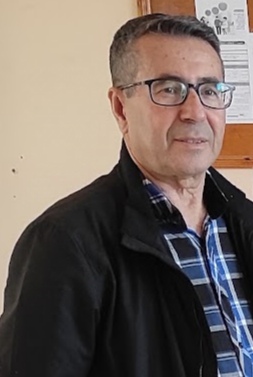
M. BOUALLEG Saida

MCA

Directory of teachers

Department

CIVIL ENGINEERING

Research Interests

Matériaux

Contact Info

University of M'Sila, Algeria

On the Web:

  • Google Scholar N/A
  • ResearchGate
    ResearchGate N/A
  • ORCID N/A
  • SC
    Scopus N/A

Recent Publications

2023-11-10

Dam sludge effects - as a cement substitution- on cementitious materials

This article aims to propose a solution to two environmental problems. One
is the silting up of dams, despite the dredging operations. The other
represents the rate of cement used in the mortar or concrete. The solution is
to introduce the calcined dredged sludge as a cement substitute. Treatment
at 600 °C with different heating rates (5, 10 and 20 °C/mn) was applied to
make the mortar and measure setting time and hydration temperature. This
substitution increased the values of both tests due to the dilution and filler
effect. Choosing the last speed, different percentages have been selected (5,
10 and 20%) to produce ordinary concrete and the follow up of the
compressive strength and water absorption tests. The results of the two
tests are lower than the control. In concrete, the pozzolanic reaction is very
weak to develop a compact structure due to a lack of reactive silica. The
results obtained for 5% and 10% of substitution are very encouraging.
Citation

M. BOUALLEG Saida, (2023-11-10), "Dam sludge effects - as a cement substitution- on cementitious materials", [international] 4th International Conference on Applied Engineering and Natural Sciences on 10-13 November in 2022 at Konya/Turkey. , Konya/Turkey.

2023-10-18

study of the correlation chemical-mechanical test and the hydration rate of cement mortar based on slag materials

The aim of this work is to quantify cement hydration as a function of the mechanical and chemical characteristics of mortar cement. To control the quantity of hydrated cement, we adopted the thermogravimetric thermogravimetric (TGA) method, which enabled us to determine the degree of hydration α(t),This technique is coupled with carbonation and ordinary mortar strength. The experimental data obtained were correlated and interpreted the evolution of strength and carbonation as a function of the degree of hydration, unavoidable. Cements containing different percentages of slag.The evolution of kinetics was studied for 3, 7 and 28 days. According to the results obtained, the hydration rate is inversely proportional to the addition content in the cement. The degree of hydration is directly related to the formation of hydrates and portlandite. The greater the quantity, the greater the hydration.The Bhatty Bhatty method is verified for calculating the degree of hydration and can be successfully applied to composite cements.
Citation

M. BOUALLEG Saida, (2023-10-18), "study of the correlation chemical-mechanical test and the hydration rate of cement mortar based on slag materials", [national] first national conference on advanced materials and their application(NCAMA 23 ) , tipaza/algeria

2022-06-28

THE BAHAVIOR OF CEMENT WITH DAM SLUDGE AS RAW MATERIEAL

This article aims to propose a solution to two environmental problems. One
is the silting up of dams, despite the dredging operations. The other
represents the rate of cement used in the mortar or concrete. The solution is
to introduce the calcined dredged sludge as a cement substitute. Treatment
at 600 °C with different heating rates (5, 10 and 20 °C/mn) was applied to
make the mortar and measure setting time and hydration temperature. This
substitution increased the values of both tests due to the dilution and filler
effect. Choosing the last speed, different percentages have been selected (5,
10 and 20%) to produce ordinary concrete and the follow up of the
compressive strength and water absorption tests. The results of the two
tests are lower than the control. In concrete, the pozzolanic reaction is very
weak to develop a compact structure due to a lack of reactive silica. The
results obtained for 5% and 10% of substitution are very encouraging.
Citation

M. BOUALLEG Saida, (2022-06-28), "THE BAHAVIOR OF CEMENT WITH DAM SLUDGE AS RAW MATERIEAL", [national] FIRST NATIONAL CONFERENCE ON MATERIALS SCIENCES AND ENGINEERING (MSE 22) , KHENCHELA

2022-05-21

Performance of Eco-Binder Made with Dredged Sludg

This work aims to propose a solution to two environmental problems. One is the siltation of
dams. The other represents the rate of cement used in mortar and concrete. The solution is to introduce
calcined dredging sludge as a substitute for cement. A heat treatment at 600°C was applied to the sludge.
Different treatment rates were applied for the preparation of mortars (5, 10 and 20°C/min) to measure the
rate of non-evaporable water and the porosity accessible to water. In the first test, the interval is very tight
(3.20-3.40%), in the second test, the best porosity is attributed to 600/20 mortar with 18.50% of the total
volume, against 19% in CEMI mortar. This substitution improves the compactness of mortars by tightening
the capillary pores. For concrete, the last processing rate was adopted and different percentages were
selected (5, 10 and 20%). The sound propagation in the UPV test is greater than 4 Km/s with a slight
advantage to CEMI concrete followed by concrete with 5%, 10% then 20% of substitution. In concrete, the
pozzolanic reaction is very weak to develop a compact structure due to a lack of reactive silica and a low
percentage of kaolin (13%). The results obtained for 5% and 10% substitution are very encouraging for the
use of these types of cement in second-order works.
Citation

M. BOUALLEG Saida, (2022-05-21), "Performance of Eco-Binder Made with Dredged Sludg", [international] The Second Edition of MAASI Scientific Week (SW22), from 21 to 31 May 2022, Istanbul- Turkey (Hybrid Mode) , Istanbul- Turkey

2021

The Study of Slag Cement’s Microstructural Properties

The objective of this work is the quantification of hydration in cement. To monitor this quantity of hydrated cement "hydration degrees" we adopted the method of thermogravimetric analysis (TGA) which allowed us to determine the degree of hydration α(t), bound water (WB) and non-evaporable water. This study is completed by the analysis of diffractometers (DRX). Cements containing different percentages of slag. The evolution of the kinetics was studied during 3, 7 and 28 days. According to the results obtained, the hydration rate is inversely proportional to the addition content in the cement. The degree of hydration is directly related to the formation of hydrates and portlandite, more non-evaporable water retained in the hydrates corresponds to a high degree of hydration. This technique is coupled with the carbonation and strength of ordinary mortar. The experimental data obtained have been correlated and interpreted with regard to the evolution of strength and carbonation as a function of the degree of hydration, bound water and non-evaporable water of the cement hydrates. The Bhatty method is verified for the calculation of the degree of hydration and can be successfully applied for composite cements.
Citation

M. BOUALLEG Saida, (2021), "The Study of Slag Cement’s Microstructural Properties", [national] Annales de Chimie - Science des Matériaux , Lavoisier

2017

The Combined Effect of the Initial Cure and the Type of Cement on the Natural Carbonation, the Portlandite Content, and Nonevaporable Water in Blended Cement

The aim of this work is to better understand the physical and chemical phenomena involved in hydrated mix (clinker + addition) during the natural carbonation process, to characterize cement with supplementary cementitious materials (SCMs) under various curing environment. The prepared cement pastes were characterized by thermogravimetric analysis. The results showed a considerable influence of the environment on the properties of mortars and cement and a perfect correlation between compressive strength, natural carbonation, nonevaporable water, and portlandite content. It was observed that the reduction of the curing period makes the mortars more sensitive. The kinetics of process was evaluated from Ca(OH)2 content and nonevaporable water contained in mortars. These two parameters reflect the hydration progress of the water/cement ratio studied. The weight loss due to Ca(OH)2 decomposition, calculated by DTA/TG analysis, shows the effect of the pozzolanic reaction and the natural carbonation. The supplementary cementitious materials (SCMs) play a considerable role in the slowing down of the aggression environment.
Citation

M. BOUALLEG Saida, Daoudi Aziz, , (2017), "The Combined Effect of the Initial Cure and the Type of Cement on the Natural Carbonation, the Portlandite Content, and Nonevaporable Water in Blended Cement", [national] Advances in Materials Science and Engineering , Hindawi

The Combined Effect of the Initial Cure and the Type of Cement on the Natural Carbonation, the Portlandite Content, and nonevaporable Water in Blended Cement

The aim of this work is to better understand the physical and chemical phenomena involved in hydrated mix (clinker +
addition) during the natural carbonation process, to characterize cementwith supplementary cementitiousmaterials (SCMs) under
various curing environment.The prepared cement pastes were characterized by thermogravimetric analysis. The results showed a
considerable influence of the environment on the properties of mortars and cement and a perfect correlation between compressive
strength, natural carbonation, nonevaporable water, and portlandite content. It was observed that the reduction of the curing
period makes the mortars more sensitive.The kinetics of process was evaluated from Ca(OH)2 content and nonevaporable water
contained inmortars.These two parameters reflect the hydration progress of the water/cement ratio studied. The weight loss due to
Ca(OH)2 decomposition, calculated by DTA/TG analysis, shows the effect of the pozzolanic reaction and the natural carbonation.
The supplementary cementitious materials (SCMs) play a considerable role in the slowing down of the aggression environment.
Citation

M. BOUALLEG Saida, (2017), "The Combined Effect of the Initial Cure and the Type of Cement on the Natural Carbonation, the Portlandite Content, and nonevaporable Water in Blended Cement", [international] Advances in Materials Science and Engineering , HINDAWI , Angleterre

INFLUENCE OF WET CURE ON THE CHARACTERISTICS OF MORTAR AND CONCRETE UNDER THE EFFECT OF AN AGGRESSIVE ENVIRONMENT (CARBONATION)

The deterioration of concrete structures results from the corrosion of the steel
reinforcement due to the carbonation of concrete and other aggressive agents (chloride ions,
acid rain , etc…). The corroded reinforcement steel bars increases in volume, the concrete
covering it is affected and hence the construction damage. The design of concrete is highly
related to the concrete environment exposure during a project life. The cement is the main
source of environmental impacts of the use of such concrete material. In order, to optimize the
latter from an environmental point of view, it is necessary to reduce its cement dosage. This
can be done by the cement replacement with mineral additions during its manufacturing.
The present thesis work aims to study and better understand the physic-chemical
phenomena involved in the hydrated mixture products (clinker + addition) during the natural
carbonation process, to characterize cement with a high rate of substitution additions,
quantify the effect of initial wet curing maturation on the different physico- chemical and
mechanical properties of studied cementitious matrices .The investigation of study here in
sheds light on the adequacy of the treatment cure modes on the performances of the mortars
and concrete at hardened state.
The parameters so far considered are the type of cement, the nature of the mineral addition
and the curing regime mode. The results obtained show the considerable influence of the cure
on the physical, mechanical and microstructural characteristics of the cementitious matrices.
Further, a perfect correlation between the different parameters studied is noted.
Keywords: Carbonation, Environment, Clinker, Mechanical resistance, Mineral additive.
Citation

M. BOUALLEG Saida, (2017), "INFLUENCE OF WET CURE ON THE CHARACTERISTICS OF MORTAR AND CONCRETE UNDER THE EFFECT OF AN AGGRESSIVE ENVIRONMENT (CARBONATION)", [national] université de Msila

2014

Influence of the Cure Wet on Mechanical and Physical Chemical Mortar. Processing and Properties of Advanced Ceramics and Composites VI: Ceramic Transactions,

ff
Citation

M. BOUALLEG Saida, Clastres Pierre, , (2014), "Influence of the Cure Wet on Mechanical and Physical Chemical Mortar. Processing and Properties of Advanced Ceramics and Composites VI: Ceramic Transactions,", [national] , The American Ceramic Society

Influence of the cure wet on mechanical physical and chemical mortar

The effect of moist curing on the durability of concrete is very important in CPA
concrete with cements containing slag, fly ash and silica fume, the nature and texture
hydrates are changed. Improving sustainability is real what conditions as wet cure is
sufficiently long to actually allow a change of hydrates. The term curing period is the period
during which the cementitious material is allowed to stand in order to develop its
performance in the hardened state.Regarding the choice of materials and sensitivity cement
meant for media environments, the treatment plan is the key factor ensuring durability. The
choice of cement is a secondary factor.
In this sense the present work focuses on the effect of wet curing on the mechanical
characteristics of the porosity accessible to water and depth of natural carbonation, mortars
exposed to air for a continuous treatment is chosen as the middle witness.
This study considers four types of mortar prepared with different high-grade cement added
(clinker effect) such as CPA, CRS, CL30%, 30% CZ30%. Don’t have to find that the CPA
and CRS after lasting cure for 7 days in the wet room (T = 20 °, RH = 95%) gives the best
characteristics due to their high mechanical strength. Low portlandite, Cements CPJ always
have the worst properties. Less important features more explained by the low speed and the
Degree of hydration is affected by inadequate curing.
Keywords: cure, pozzolan, slag, strength, carbonation.
Citation

M. BOUALLEG Saida, (2014), "Influence of the cure wet on mechanical physical and chemical mortar", [international] The American Ceramic society, Transactions , John Wiley & Sons , Canada

2004

Effet des milieux agressifs sur les caractéristiques de durabilité des bétons et des matrices cimentaires

Ce travail a pour but d’étudier le comportement et la durabilité des bétons altérés par
des eaux agressives, d’identifier les causes, de comprendre les mécanismes et d’évaluer
l’influence de la cure et le type de ciment pour ce phénomène.
La résistance aux agressions dépend de plusieurs facteurs qu’il n’est pas toujours aisé
d’isoler : composition des différents constituants du béton (ciment, granulats), technique de
mise en oeuvre, âge du béton, conditions climatiques et la nature des agents agressifs qu’il
soient minéraux, organiques ou biologiques.
La plupart des mécanismes d’altération sont gouvernés par processus lents. Depuis
plusieurs années, des procédures d’essais accélérés ont été développées par les laboratoires;
certaines sont normalisées (perméabilité aux ions chlore, caractérisation de la réactivité des
granulats….), d’autres ont été déjà mises en oeuvre dans les applications industrielles
(détermination du coefficient de migration, diffusion des chlorures, carbonatation accélérée,
décalcification accélérée).
La compréhension de ce mécanisme nécessite une revue bibliographique et une
procédure expérimentale qui révèle la dégradation du béton soumis à des altérations.
La procédure expérimentale consiste à étudier le comportement des éprouvettes en pâte de
ciment, en mortier exposés à des différents traitements chimiques, à savoir, les nitrates
d’ammonium, les sulfates de magnésium, les sulfates de sodium, le chlorure de sodium et
l’acide sulfurique pendant une durée de trois mois.
Ces éprouvettes ont été soumises à des essais de résistance mécanique, en plus, une étude
de la structure interne est faite par essais de diffraction des rayons X et la mesure de la
profondeur de la carbonatation (la zone de basicité réduite)(coloration au phénophtaléine).
Cette étude a été réalisée en prenant en considération deux types de ciment à base d’ajout
(pouzzolane (20%) et calcaire (15%)). Avec L’incorporation de deux types d’adjuvants super
plastifiants Il est recherché, lors de cette étude, l’influence de deux types d’ajouts minéraux
actif et inerte, finement broyés et incorporés, dans le mélange primaire (gypse+clinker+ajout),
sur les caractéristiques physico mécanique et chimique des pâtes visant comme objectif la
possibilité d’élaboration d’un béton résistant aux milieux agressifs.
Mots clé:les sulfates, les acides, les chlorures, les nitrates d’ammonium, la pouzzolane,le
Citation

M. BOUALLEG Saida, (2004), "Effet des milieux agressifs sur les caractéristiques de durabilité des bétons et des matrices cimentaires", [national] université de m'sila

2001

EFFET DE L 'ACTIVATION DU CIMENT SUR LA REPONSE MECANIQUE DU MORTIER

Ce travail consiste à caractériser les ajouts cimentaires tel que le laitier qui sont reconnus par leur faible réactivité et étudier leur comportement avec le ciment sous l’effet de plusieurs paramètres tel que le milieu de conservation, le teneur d’ajout, le dosage en eau. Le laitier combiné avec le ciment ordinaire, ainsi les résultats obtenus des avantages et des inconvénients .Ce travail expérimental a pour objectif d’évaluer expérimentalement l’influence de l’activation chimique sur les propriétés physiques, mécanique et la profondeur de carbonatation, de la pate de ciment et le laitier du mortier.
Citation

M. BOUALLEG Saida, (2001), "EFFET DE L 'ACTIVATION DU CIMENT SUR LA REPONSE MECANIQUE DU MORTIER", [national] Université de M'sila

← Back to Researchers List