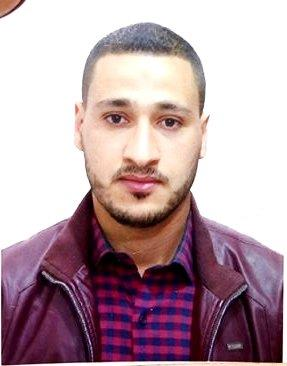
M. SAAD Ahmed

MCA

Directory of teachers

Department

Departement of Agricultural sciences

Research Interests

ECOLOGY ZOOLOGY VEGETABLE ¨PRODUCTION

Contact Info

University of M'Sila, Algeria

On the Web:

  • Google Scholar N/A
  • ResearchGate
    ResearchGate N/A
  • ORCID N/A
  • SC
    Scopus N/A

Recent Publications

2024-12-25

Morphological characterization and ecotypic classification of olive varieties in Bordj Bou Arreridj, Algeria

The aim of this research is to establish the phenotypic variation
that exists in the olive varieties of Olea europaea L. in the Bordj Bou
Arreridj region of Algeria. The study examined 18 olive varieties from
20 farms, focusing on the morphological characterisation of fruits,
leaves, and endocarps using standard descriptors and precise measurement tools. Significant coefficients of variation were observed for
the traits studied, indicating substantial differences among the varieties. The highest variability was found in fruit weight, with a coefficient of variation (CV) of 48.60%, while leaf length demonstrated the
lowest CV at 9.77%. Principal Component Analysis (PCA) primarily
distinguished three different ecotypic groups based on fruit and endocarp size and shape parameters. The Bray-Curtis similarity analysis
revealed compositional similarities among some of the local variants,
providing insights into their potential genetic relationships. Notably,
the study reports the presence of the rare Leucocarpa variety, which
had not been previously documented in Algeria. This discovery highlights the importance of thorough regional surveys in uncovering hidden biodiversity. The findings reveal a rich agro-morphological genetic variation in olive ecotypes in the region, which is valuable for
genetic conservation efforts and breeding research. This diversity
could potentially be exploited to develop cultivars with improved
traits such as disease resistance, oil quality, or adaptation to specific
environmental conditions.
Our classification enables targeted breeding, prioritized conservation, and optimized cultivation practices, supporting the development
of resilient, locally-adapted varieties and the preservation of valuable
genetic resources in the region's olive industry.
Citation

M. SAAD Ahmed, Seghiri Abdel Madjid, Sebbane Nour ElHouda, , (2024-12-25), "Morphological characterization and ecotypic classification of olive varieties in Bordj Bou Arreridj, Algeria", [national] JOURNAL OF AGRICULTURE AND APPLIED BIOLOGY , Future Science

2024-12-10

Livestock farming practices in Tébessa: socio-economic profile and agricultural strategies in Algeria's steppe region

In the eastern Algerian steppe region of Tébessa, livestock farming represents a critical
agricultural system facing significant environmental and socio-economic challenges. This
study investigates contemporary livestock farming practices through a comprehensive
questionnaire-based survey, focusing on production strategies, land management, and crop
cultivation.
Forage crop cultivation emerged as a key adaptive strategy, with barley, alfalfa, and maize
forming the primary agricultural portfolio. Land management demonstrated nuanced
characteristics, with 40% of land under private ownership and an average total land area of 12
hectares. The irrigation infrastructure plays a crucial role, with 5 hectares consistently
dedicated to irrigated cultivation. The agricultural landscape reveals strategic approaches to
resource utilization. Crop selection reflects local environmental constraints and market
demands. Barley and alfalfa serve as primary fodder crops, while maize provides additional
nutritional diversity for livestock. The consistent irrigation of 5 hectares underscores the
importance of water management in this arid steppe environment.
The demographic profile of breeders provides contextual insight into these farming practices.
The breeder population was exclusively male, with a mean age of 49 years. Educational
attainment showed notable depth, with 33% achieving secondary education and 20%
obtaining university degrees. Professional experience remained relatively consistent, with
approximately 14% of breeders reporting comparable sector tenure.These findings illuminate
the adaptive strategies of livestock farmers in Tébessa's challenging steppe region.
Citation

M. SAAD Ahmed, Soumia Benchelali, Abdelghafour Abaidia, , (2024-12-10), "Livestock farming practices in Tébessa: socio-economic profile and agricultural strategies in Algeria's steppe region", [national] 1er colloque National sur Performance Zootechnique et Reproductive des animaux de rente steppique , Centre de recherche en agropastoralisme-Djelfa

2024-12-05

Ecological consciousness and pastoral practices in the steppes of M’sila, Algeria – shepherds’ perceptions.

This study examines the ecological awareness of shepherds in M'Sila, Algeria's steppes, an area facing significant
environmental challenges. Through semi-structured interviews, the research analyzes 50 randomly selected shepherds'
understanding of grazing patterns, environmental changes, and sustainable practices across 10 communes. Findings
reveal a complex interplay between traditional knowledge and modern concerns. Shepherds demonstrated awareness of
declining plant species, particularly (Stipa tenacissima L.) and (Artemisia herba-alba Asso), and predominantly
practiced random grazing. Drought was identified as principal cause of forage plant scarcity. The study highlights the
need for multi-faceted approaches to plant protection and livestock raising, emphasizing the urgency of implementing
large-scale sustainable management measures, enhancing training programs, and promoting resilient pastoral practices.
Keywords: Herders. Grazing. Fodder. Rangelands. Sustainability.
Citation

M. SAAD Ahmed, (2024-12-05), "Ecological consciousness and pastoral practices in the steppes of M’sila, Algeria – shepherds’ perceptions.", [national] Agrarian Academic Journal , Agrarian Academic Journal Brazil

2024-12-03

Forage Production Strategies and Resource Optimization in Arid Agricultural Systems: A Case Study of El Maadher Bousaâda Irrigated Perimeter

This study investigates forage crop production strategies in the El Maadher Bousaâda irrigated perimeter
during the 2023/2024 agricultural season, examining resource management practices across 15 farms. The
research aimed to assess agricultural diversification, crop production techniques, and systemic challenges
in an arid agricultural context. Methodology incorporated field surveys, agronomic assessments, and
SWOT analysis to evaluate current farming practices and potential development pathways. Results
revealed a dynamic forage production system characterized by crop diversification (double and triple
cropping), prioritization of oats and alfalfa, and sorghum utilization for biomass production. Critical
challenges included limited water resources, land insecurity, insufficient technical knowledge, and labor
shortages. The findings suggest that integrating sustainable water management, improved financing
mechanisms, and targeted farmer training could significantly enhance agricultural resilience and
productivity in agrosteppic environments. This research contributes to understanding adaptive agricultural
strategies in resource-constrained regions.
Citation

M. SAAD Ahmed, (2024-12-03), "Forage Production Strategies and Resource Optimization in Arid Agricultural Systems: A Case Study of El Maadher Bousaâda Irrigated Perimeter", [national] 1st National Seminar on the Valorization of Natural Resources in Agro-Semi-Arid Environments: Potential, Improvement Strategies, and Safeguarding. , Centre de recherche en agropastoralisme-Djelfa

Characterization and Diversity Analysis of Olive (Olea europaea L.) Varieties in Bordj Bou Arreridj, Algeria: Insights into Ecotypic Grouping and Agro-environmental Adaptation

This study explores the phenotypic diversity of 18 olive (Olea europaea L.) varieties in Bordj Bou Arreridj,
Algeria. Utilizing principal component analysis (PCA) and Bray-Curtis similarity analysis, we identified three
distinct ecotypic groups explaining 64.92% of total variability. Group 1 includes varieties like Ronde de
Miliana and Adjeraze, characterized by large fruits and kernels. Group 2, featuring Sigoise and Sevillana,
has elongated fruits and kernels. Group 3, including Chemlal and Arbequina, comprises varieties with small
fruits, kernels, and leaves. This phenotypic grouping suggests significant adaptation to various agroenvironmental conditions.
Through similarity analysis, we discovered close genetic relationships between certain varieties (e.g.,
Adjeraze and Aberkane) and marked distinctions among others (e.g., Chemlal and Sevillana). The study
also identified previously unknown varieties, enhancing the catalog of 15 local and three introduced
varieties. These findings provide valuable insights for varietal selection and breeding programs tailored to
diverse growing conditions.
Citation

M. SAAD Ahmed, Sebbane Nourelhouda,, Seghiri Abdel Madjid, , (2024-12-03), "Characterization and Diversity Analysis of Olive (Olea europaea L.) Varieties in Bordj Bou Arreridj, Algeria: Insights into Ecotypic Grouping and Agro-environmental Adaptation", [national] 1st National Seminar on the Valorization of Natural Resources in Agro-Semi-Arid Environments: Potential, Improvement Strategies, and Safeguarding. , Centre de recherche en agropastoralisme-Djelfa

2024-11-26

Phenological plasticity and adaptation of quinoa in the semi-arid highlands of Algeria: preliminary results of the first introduction in Bordj Bou Arreirdj

Understanding quinoa (Chenopodium quinoa Willd.) adaptability in Algeria is essential for agricultural diversification. This study presents preliminary results on the developmental plasticity of
five quinoa varieties during their first-ever introduction in the semi-arid highlands of El Hamadiah, Bordj Bou Arreirdj Province.
Citation

M. SAAD Ahmed, Khaled Halima, Benmaatoug Soulaf, Barakat Imane, , (2024-11-26), "Phenological plasticity and adaptation of quinoa in the semi-arid highlands of Algeria: preliminary results of the first introduction in Bordj Bou Arreirdj", [international] Workshop International sur le quinoa en Algérie , Université kasdi merbah ouargla

2024-09-25

Spatio-Temporal Evolution of Livestock Dynamics and Vegetation Cover Transformation in the Algerian Steppe, Diachronic Analysis

This study aims to highlight the importance of livestock dynamics and the evolution
of the vegetation index in recent years, as well as to present the relationship between
these two dynamics in the Algerian steppe in light of a new vision in the use of
geographic information systems in the treatment of environmental and agricultural
development in animal production. The Algerian steppe, with its unique characteristics
of the bio-climatological factors, natural resources as a specific vegetal cover and
animal species wealth, economic activities, cultural backgrounds, and practices, has
deteriorated in recent years from total and/or partial denaturation of vegetation and
pastoral spaces. This denaturation was caused in the first place by biological factors
associated with economic breeding activities and affected the sustainable development
of the steppe area. To propose an efficient strategy to provide the natural ecosystem of
the steppe area, vegetation cover balance, and the maintenance of food security by
livestock and the sustainable development of the communities, many study scenes
were created by using spatiotemporal monitoring of the evolution of natural resources
using LANDSAT satellite images and the Q GIS dataset. Using remote sensing and
geographic information system (SIG) data, his changes during 2017-2021 may be
detected using knowledge of vegetation and livestock distribution dynamics. The areas
with the highest concentration of livestock herd possess a low vegetation index,
indicating a significant correlation between the intensity of the vegetal cover
denaturation and the growing dynamics of livestock herd.
Keywords: dynamic; livestock; spatio-temporal; steppe; vegetation index.
Citation

M. SAAD Ahmed, IMELHAYENE Meriem, SAIDJ Dahia, HADBAOUI Ilyes, SENOUSSI Abdelhakim, ADAMOU Abdelkader, , (2024-09-25), "Spatio-Temporal Evolution of Livestock Dynamics and Vegetation Cover Transformation in the Algerian Steppe, Diachronic Analysis", [national] African Journal of Biological Sciences , African Science Publications

2024-06-27

Project Overview: Olécycl BBA - Innovative Web Platform for Olive Farmers

The Olécycl BBA project introduces an innovative web-based platform addressing critical
challenges in olive farming. Research from 2022 to 2024 revealed that most olive farmers are
middle-aged with middle school education, and 60% lack essential knowledge about modern
agricultural practices. This platform aims to bridge the gap between traditional and
sustainable farming techniques.
Serving as a comprehensive resource, Olécycl BBA offers climatological information, expert
advice, and an olive variety database. It addresses key challenges including limited
understanding of olive varieties, inadequate technical knowledge, inefficient waste
management, and suboptimal marketing strategies.
The platform features modules for real-time climate data, expert advisory systems, a variety
catalog, waste management resources, and marketing tools. It aims to enhance farmer
knowledge, improve productivity and quality, promote sustainable practices, and expand
market reach.
Implementation strategies include user-friendly design, mobile responsiveness, regular expert
updates, and data analytics for personalized recommendations. The platform operates on a
unique exchange model where farmers compensate with olive by-products or oil instead of
money.
Olécycl BBA facilitates knowledge exchange between farmers and experts, creating a mutually
beneficial ecosystem. By providing guidance in exchange for olive products, it recognizes the
global significance of olive cultivation, striving to maximize benefits while minimizing
environmental impact. This approach creates a sustainable cycle of knowledge and resource
exchange within the olive farming community.
Citation

M. SAAD Ahmed, (2024-06-27), "Project Overview: Olécycl BBA - Innovative Web Platform for Olive Farmers", [international] Biosphere sustainability of the countries of the world. , Université RUDN nommée d'après Patrice Lumumba, Russie.

2024-04-20

valorization of olive oil by-products: perceptions and expectations of bba farmers

Olive farming yields sizable quantities of by-products (olive pomace, olive mill
wastewater) with potential economic and ecological value. A survey of 15 olive growers
of Bordj Bou Areiridj region found 60% currently dispose of these residuals by
incineration or landfilling, lacking proper recycling pathways. However, 92% expressed
willingness to sell their by-products given solutions to collect and valorize them.
Additionally, when prompted about innovative technologies to convert olive pomace into
energy or animal feed, 86% conveyed interest and 41% would consent to
accommodating practices to enable repurposing. The results indicate tangible potential to
institute olive biorefineries in Algeria, contingent upon overcoming select technoeconomic and social impediments
Citation

M. SAAD Ahmed, Sebbane Nourelhouda, Seghiri Abdel Madjid, , (2024-04-20), "valorization of olive oil by-products: perceptions and expectations of bba farmers", [national] 1er Séminaire National sur la Valorisation de la Biomasse Végétale Naturelle et Résiduelle , Université Mohamed Khider-Biskra

2024-02-05

Assessing pollinator diversity for environmental security: A baseline survey of butterflies in the M’sila region, Algeria.

The results provide a valuable baseline against which to measure future anthropogenic and climate impacts.
Given numerous pressures on local agroecosystems, long-term monitoring of key pollinator
groups is needed to safeguard pollination services underpinning both food security and rural
livelihoods. An integrated research approach will help build environmental security through
pollinator-friendly landscape management practices.
Citation

M. SAAD Ahmed, (2024-02-05), "Assessing pollinator diversity for environmental security: A baseline survey of butterflies in the M’sila region, Algeria.", [international] Premier congrès international : Impact du changement climatique sur l'environnement des insectes, les insectes forensiques comme modèle , Université Mohamed Khider ,Biskra

Are Ruderal Environments a Shelter for Butterflies in Semi-Arid Regions Facing Climate Change?

The ruderal habitats contain a native flora adapted to aridity, which forms plant assemblages
aligned to semi-desert conditions, shaping an aridity-gradient habitat niche space influencing
the insect diversity.
This study evaluates the daytime butterfly diversity in ruderal environments across the semiarid region of M’sila province, Algeria. Surveys across 10 sites found only 9 species out of
121 nationally recorded, spanning 4 families. Key species include Vanessa cardui, Pararge
aegeria, and Polyommatus icarus. This limited diversity questions the ability of these habitats
to serve as climate refuges. Still, conserving remnants aids resilience understanding. Results
reveal extinction pressures facing butterflies in human-impacted arid areas. Further habitat
restoration research is vital to transform ruderal zones into biodiversity havens adapted to
shifting regional climates. Informed management offers hope for vulnerable insects across the
region.
Citation

M. SAAD Ahmed, (2024-02-05), "Are Ruderal Environments a Shelter for Butterflies in Semi-Arid Regions Facing Climate Change?", [international] Premier congrès international : Impact du changement climatique sur l'environnement des insectes, les insectes forensiques comme modèle , Université Mohamed Khider ,Biskra

2024-01-16

L'écologie appliquée

Faculté des sciences
Département des sciences agronomiques
Cycle : Licence
Niveau : 3 Année LMD
Polycopié pédagogique
Matière : Ecologie Appliquée
Polycopié de cours d’écologie appliquée, destiné aux étudiants inscrits en
Troisième année Licence Spécialité : Sol et Eau
Citation

M. SAAD Ahmed, (2024-01-16), "L'écologie appliquée", [national] université de M'sila

2023-12-19

Academic Writing in Scientific Research

Academic Writing in Scientific Research
Citation

M. SAAD Ahmed, (2023-12-19), "Academic Writing in Scientific Research", [international] Innovations Journal of Humanities and Social Studies (IJHSS) , via zoom

2023-12-10

Butterflies as Biodiversity Indicators: Improving Understanding of Rhopalocera Diversity in the Arid M’Sila Region, Algeria

The environment we propose to study occupies an important part of the Algerian
steppe. It is characterized by a semi-arid bioclimate.
A "transect" is traveled monthly, with the monitoring time frame defined between 09:00
AM and 4:00 PM.
For 10 minutes over a distance of 250 m Counting in an "imaginary box" the number of butterflies caught by visual hunting and
using a butterfly net. Species identification is done in the laboratory using identification keys.
Citation

M. SAAD Ahmed, (2023-12-10), "Butterflies as Biodiversity Indicators: Improving Understanding of Rhopalocera Diversity in the Arid M’Sila Region, Algeria", [international] Travelling conference Ta’awon4Quinoa- Algiers , Institut National de la Vulgarisation Agricole- Alger

2023-12-09

STUDY ON DEVELOPING RESILIENT AND SOCIALLY BENEFICIAL OLIVE FARMING IN ALGERIA'S FRAGILE STEPPE ECOSYSTEMS

A recent study in the arid steppe regions of Algeria (M’sila & Djelfa) identifies several key factors for developing an olive farming system that is both productive and environmentally sustainable in these fragile areas. At the core of concerns over environment and sustainable development, these strategic findings should guide a reasoned expansion of this crop.
The optimal olive tree age, choice of low altitude plots with gentle slopes, as well as sustainable soil management are singled out as essential to ensure decent yields while preserving resources. Likewise, thoughtful integration with input-efficient truck farming contributes to this goal.
Integrated planning based on these key factors could thus combine productivity and resilience of olive farming in the face of heightened environmental challenges in steppe regions. It would promote its sustainable socio-economic development, endorsing concrete and innovative solutions to address the issues of fragile environments degradation.
Citation

M. SAAD Ahmed, lamine manel, salamni chaima, Saied said, , (2023-12-09), "STUDY ON DEVELOPING RESILIENT AND SOCIALLY BENEFICIAL OLIVE FARMING IN ALGERIA'S FRAGILE STEPPE ECOSYSTEMS", [national] 2ème Séminaire National Environnement & Gestion Durable , Université de Relizane

2023-12-01

les cultures fourragers

La production et la gestion des cultures fourragères représentent un enjeu économique et
environnemental majeur pour de nombreux pays à travers le monde, notamment en Afrique du
Nord où l'élevage joue un rôle essentiel dans l'économie locale et nationale. En Algérie, la
production fourragère est relativement faible, ne représentant que 2,18 % de la superficie totale
du pays, tandis que les fourrages naturels et artificiels occupent 11,21% de la Surface Agricole
Utile (SAU).Le déficit fourrager en Algérie reste préoccupant, obligeant le pays à importer
massivement des protéines chaque année. Malgré les efforts visant à améliorer la production
fourragère, l'Algérie doit relever des défis majeurs pour parvenir à produire suffisamment de
fourrage de manière durable, en prenant en compte les différentes contraintes rencontrées.
Ainsi, ce secteur est en constante évolution et nécessite une attention particulière pour être
amélioré. Cet ouvrage a pour objectif de fournir aux étudiants des connaissances théoriques et
sur les cultures fourragères, leur exploitation et leur conservation. Il s'adresse notamment aux
étudiants de troisième année licence en agronomie, spécialité production végétale
Citation

M. SAAD Ahmed, (2023-12-01), "les cultures fourragers", [national] , Collection scientifique De la Faculté des Sciences Université Mohamed Boudiaf M’Sila

2023-11-30

KEY FACTORS INFLUENCING OLIVE YIELDS FOR SUSTAINABLE DEVELOPMENT IN ARID REGIONS OF DJELFA AND M'SILA, ALGERIA

In Algeria, there is an increasing extension of olive grove cultivation, it is essential to identify
the key factors that contribute that drive olive grove yields in drought-prone regions, such as steppe.
This necessity is becoming imperative for policymakers within the agricultural sector, as it will enable
them to make informed decisions regarding more effective strategies for expanding olive tree
plantations across the country.
This paper focuses on analysing the olive tree production systems in two provinces in the
Algerian steppes: Djelfa and M'sila. These provinces represent new areas for olive cultivation and
demonstrate successful agricultural programs in Algeria.
The paper proceeds to address the question: what are the primary factors influencing olive
grove yields? This inquiry is pursued by investigating a total of 20 olive growers, ten from each
province. The findings from our research indicate that olive groves situated at higher altitudes (above
600 meters above sea level), on gently sloping terrain (ranging from 0 to 0.03), and managed through
the application of technical itineraries and effective management practices by well-educated and
younger farmers, tend to yield better results in terms of olive production. Furthermore, the impact of
governmental subsidies and policies related to land tenure regularization also exerts a significant effect
on enhancing production and yielding improved outcomes.
Citation

M. SAAD Ahmed, (2023-11-30), "KEY FACTORS INFLUENCING OLIVE YIELDS FOR SUSTAINABLE DEVELOPMENT IN ARID REGIONS OF DJELFA AND M'SILA, ALGERIA", [national] Natural Resources and Sustainable Development , University of Oradea Publishing House

2023-11-29

Richesse floristique cachée : inventaire des espèces végétales d'un espace vert ordinaire à Boussaâda (Algérie).

Les espaces verts urbains abritent une biodiversité végétale souvent négligée. Cette étude vise à inventorier les plantes ornementales et spontanées d'une place publique de
Boussaâda (Algérie) afin d'évaluer la diversité floristique de cet espace. Au total, 20 espèces ont été recensées, appartenant à 13 familles botaniques.
Citation

M. SAAD Ahmed, Saied said, , (2023-11-29), "Richesse floristique cachée : inventaire des espèces végétales d'un espace vert ordinaire à Boussaâda (Algérie).", [national] Séminaire National sur les Plantes Spontanées , Université de Ghardaïa

2023-11-28

Emerald Resources NL

introduction to EMERALD RESSOURCES FROM EMERALD PUBLISHER MENA
Citation

M. SAAD Ahmed, (2023-11-28), "Emerald Resources NL", [international] Introduction to Emerald Resources IRAQ , Cihan University - Duhok

2023-11-26

Quantifying spatiotemporal variation in butterfly assemblages across agricultural biotopes in M’sila, Algeria.

Quantifying spatiotemporal variation in butterfly assemblages across agricultural
biotopes in M’sila, Algeria.
Citation

M. SAAD Ahmed, (2023-11-26), "Quantifying spatiotemporal variation in butterfly assemblages across agricultural biotopes in M’sila, Algeria.", [national] The 1ere National Conference on Saharan agriculture: challenges and possibilities , Higher School of Saharan Agriculture - El Oued -.

Assessing Factors Influencing Olive Yield Variability in Ten Orchards of Djelfa

Assessing Factors Influencing Olive Yield Variability in Ten Orchards of Djelfa
Citation

M. SAAD Ahmed, SAIED SAID, , (2023-11-26), "Assessing Factors Influencing Olive Yield Variability in Ten Orchards of Djelfa", [national] The 1ere National Conference on Saharan agriculture: challenges and possibilities , Higher School of Saharan Agriculture - El Oued -.

2023-11-18

In view of preparation of COP 28: Methods & Frameworks to Analyses Poverty and Environment Issues”

In view of preparation of COP 28: Methods & Frameworks to Analyses Poverty and Environment Issues”
Citation

M. SAAD Ahmed, (2023-11-18), "In view of preparation of COP 28: Methods & Frameworks to Analyses Poverty and Environment Issues”", [international] In view of preparation of COP 28: Methods & Frameworks to Analyses Poverty and Environment Issues” , Cihan University - Duhok

2023-11-11

Climate changes and their economic impact on strategic crops

Climate changes and their economic impact on strategic crops ,
Citation

M. SAAD Ahmed, (2023-11-11), "Climate changes and their economic impact on strategic crops", [international] Agricultural Workshops (AWS) program , Fidato Agro Plus Agricultural Training and Consulting- on line conference

2022

THE IMPACT OF CLIMATIC VARIATIONS ON CEREAL PRODUCTION IN THE SEMI-ARID CONDITIONS OF M'SILA

M'sila is one of the Algerian semi-arid regions. Its climate is continental with an arid tendency, characterized by low rainfall accompanied by a strong irregularity of precipitation associated with significant evaporation favoring the accumulation of salts on the floor. In a changing environment, vulnerability to climate change manifests itself in several ways: deterioration of food security, increased incidence of floods and droughts, including reduced agricultural production.
The aim of our study is to evaluate the impact of climatic conditions on the production of cereals in M'sila over a period of 10 years (2012–2022). The study was conducted on the basis of data collected from the M'sila meteorological station and agricultural data collected from the agricultural services of the region. This data was processed statistically using Past software. The comparison of the combined effects of the two abiotic factors, in particular temperature and rainfall, on production factors reveals relatively interesting negative correlations between (temperature and yield), (sown areas, yield) and ( sown areas, rainfall).
The main conclusion that we reach through our analysis reveals that the poor performance of cereal crops in our region is due to several reasons, the scarcity of water and the high temperatures at the end of the cycle being the main limiting factors. Water deficits are often associated with high temperatures, high sun exposure, and hot, dry winds, which can exaggerate the impact on plants.
Citation

M. SAAD Ahmed, Aliat toufik, , (2022), "THE IMPACT OF CLIMATIC VARIATIONS ON CEREAL PRODUCTION IN THE SEMI-ARID CONDITIONS OF M'SILA", [national] L’AGRICULTURE ET LE DEVELOPPEMNT DURABLE EN ZONES SEMI-ARIDES , Université Mohamed Chérif Messadia - Souk AhrasInstitut des Sciences Agronomiques et Vétérinaires Département des Sciences Agronomiques

L’étude des sols et des systèmes de cultures en zone aride à l’aide du SIG.

La gestion durable des sols est souvent considérée comme un moyen d’assurer une gestion responsable de ce patrimoine à l’échelle mondiale. Elle présente les actions et les solutions innovantes mises en œuvre depuis plusieurs années pour lutter contre la dégradation des sols, ainsi que les formules de financement retenues à cet effet.
Notre étude a été menée dans la zone de Sidi Abdelrahmane, située dans la partie sud-ouest de la wilaya de Tiaret, une zone steppique qui appartient à l’étage bioclimatique aride.
Dans le souci de la préservation des terres et la gestion durable de cette zone, une cartographie et un inventaire des ressources disponibles font l’objet de cette étude qui a permis d’identifier et de décrire les agro écosystèmes existants dans la commune de Sidi Abdelrahmane.
L’utilisation du système d’information géographique (SIG), combiné avec les analyses multi variées (ACP et AFC) des résultats d’échantillonnages pédologiques et par enquêtes , nous a permis d’élaborer des cartes thématiques de la répartition des différents systèmes de cultures dans la zone d’étude qui sont fortement dépendants de l’étage climatique et la disponibilité en eau d’irrigation et la qualité du sol .
Ces cartes pourront mettre à la disposition des utilisateurs potentiels, des responsables, élus
locaux et des décideurs une base de données pour une meilleure gestion rationnelle des ressources naturelles de cet espace aride.

Mots clés : cartes, sols , aride , AFC , tiaret.
Citation

M. SAAD Ahmed, GARTI Abderrazak, MAHI Mahi, BENKHATOU Abdelkader, , (2022), "L’étude des sols et des systèmes de cultures en zone aride à l’aide du SIG.", [international] the first International Conference on Sustainable Soil Management: A challenge of food security , CRSTRA BISKRA

The effects of climate change on the olive tree yield in M'sila Region

Abstract.
In the Mediterranean Basin, the olive tree (Olea europaea L.) is a long-standing traditional crop. It is distinguished by its prevailing climatic conditions. This crop has become the foundation for economic development in many agrarian regions in our country. Due to projected significant warming and drying trends, the Mediterranean Basin is considered a "hotspot" for climate change.
The purpose of the current study is to highlight the key effects of climatic variability on olive tree cultivation in M'sila region.
This climatic variability is manifested primarily by the rise in temperature and the reduced height of precipitation. The impact of climate variability on olive tree yield was evaluated by using various climate data (such as temperature and rainfall) across the study period (2012–2021).
The results obtained from the use of the matrix of correlations show a negative influence of the temperatures on the productive and farming parameters of the olive groves. These last are positively correlated with precipitation, but with average (productive parameters) and even weak (farming parameters) bonds.

Keywords: M’sila, olive, climate, temperature, data.
Citation

M. SAAD Ahmed, CHAABANI Cheymaa, BOUNACEUR Farid, , (2022), "The effects of climate change on the olive tree yield in M'sila Region", [national] Séminaire National sur la Biodiversité de la Faune Et la Flore en Algérie , UFM CONSTANTINE

2019

BUTTERFLY SPECIES RICHNESS AND DIVERSITY IN DIFFERENT HABITATS OF M’SILA REGION, ALGERIA

nvestigations of the Rhopalocera fauna in M’sila region were carried out in four different type of habitats (agricultural, steppe, forest, and ruderal areas). Surveys were allowed to collect a total of 1139 mature butterflies rounded up in nineteen species. These species were belonging to five families from which the most represented was those of Pieridae 714 (62.7%). While the Nymphalidae family was the most diversified family 28.6% of the observed species. The forest habitat was the richest biotope in butterflies species (S= 16). Agricultural and forest habitats showed the highest degree of similarity in species 0.72 between habitats. Butterfly species richness was correlated with habitat selection.
Citation

M. SAAD Ahmed, Farid bounaceur, , (2019), "BUTTERFLY SPECIES RICHNESS AND DIVERSITY IN DIFFERENT HABITATS OF M’SILA REGION, ALGERIA", [national] Journal of Fundamental and Applied Sciences , the faculty of sciences and technology of the University of El Oued (Algeria).

2018

Diversity of Lepidoptera (Rhopalocera) in natural and modified habitats of Bousaâda, Algeria

The aim of this study was to evaluate the contribution of both natural and human-modified sites to butterfly species richness in Boussaâda
region, the study was carried out in the semi-arid conditions, where no data were collected and available on butterflies in this area.
Two locations were selected which were visited every month from Mars 2015 to December 2016, a total of 07 species , belonging to 03
families were collected, the most abundant family was Pieridae 61 (70.9 %). By sites, it was noted that Vanessa cardui (33.96 %), was the
most abundant species in the natural sites however, in the agricultural sites Pieris rapae ranked first with 54.55 %.
The abundance in the agricultural site was found to be lower than that in the natural site due to heavy human land modification, use, and
disturbance. The results of Shannon-Weaver index showed that diversity was much greater in the natural site with the value of (H = 1,505)
and 6 species were identified in the modified habitat, with the value of (H = 1, 08) having 4 identified species.
Keywords: Butterfly, Rhopalocerea ,Boussaada , Diversity, Natural ,Human modified , Species
Citation

M. SAAD Ahmed, (2018), "Diversity of Lepidoptera (Rhopalocera) in natural and modified habitats of Bousaâda, Algeria", [national] World Journal of Environmental Biosciences , EURESIAN PUBLICATIONS

2016

ÉCOLOGIE TROPHIQUE DU HIBOU GRAND-DUC DU DÉSERT BUBO ASCALAPHUS (SAVIGNY, 1809) DANS LA RÉGION DE L’AHAGGAR, SUD ALGÉRIEN

Le présent travail porte sur l’étude du régime alimentaire du Hibou ascalaphe
Bubo ascalaphus (Savigny, 1809) dans la région d’Outoul dans le parc
national de l’Ahaggar, à l'extrême Sud de la capitale Alger
(23°00' N. et 5°00' E.). L’analyse des 23 pelotes de l'Ascalaphe du désert a
permis de calculer un nombre de proies par pelotes varie entre 1 et 9
(moyenne = 4,34). Les espèces-proies rencontrées dans les pelotes de Bubo
ascalaphus se répartirent entre cinq catégories, dont les Insecta sont les plus
représentés avec un taux de (AR = 66,66 %), suivie par Rodontia (33,33 %).
La proie la plus profitable en biomasse est la catégorie de Rodontia
(B = 94,86 %). Parmi les proies de masse très importante, il y a
(Meriones sp, Limnoscorus sp Gerbilus sp, Rodentia indét.) (27.14 %).
Citation

M. SAAD Ahmed, farid bounaceur, Bisaaad F.Z, Marniche F, BOUTHELDJA H, N. ABAITER, K. KHELLIL, , (2016), "ÉCOLOGIE TROPHIQUE DU HIBOU GRAND-DUC DU DÉSERT BUBO ASCALAPHUS (SAVIGNY, 1809) DANS LA RÉGION DE L’AHAGGAR, SUD ALGÉRIEN", [national] Revue Ivoirienne des Sciences et Technologie , l'Ecole Normale Superieure (ENS) d'Abidjan.

← Back to Researchers List