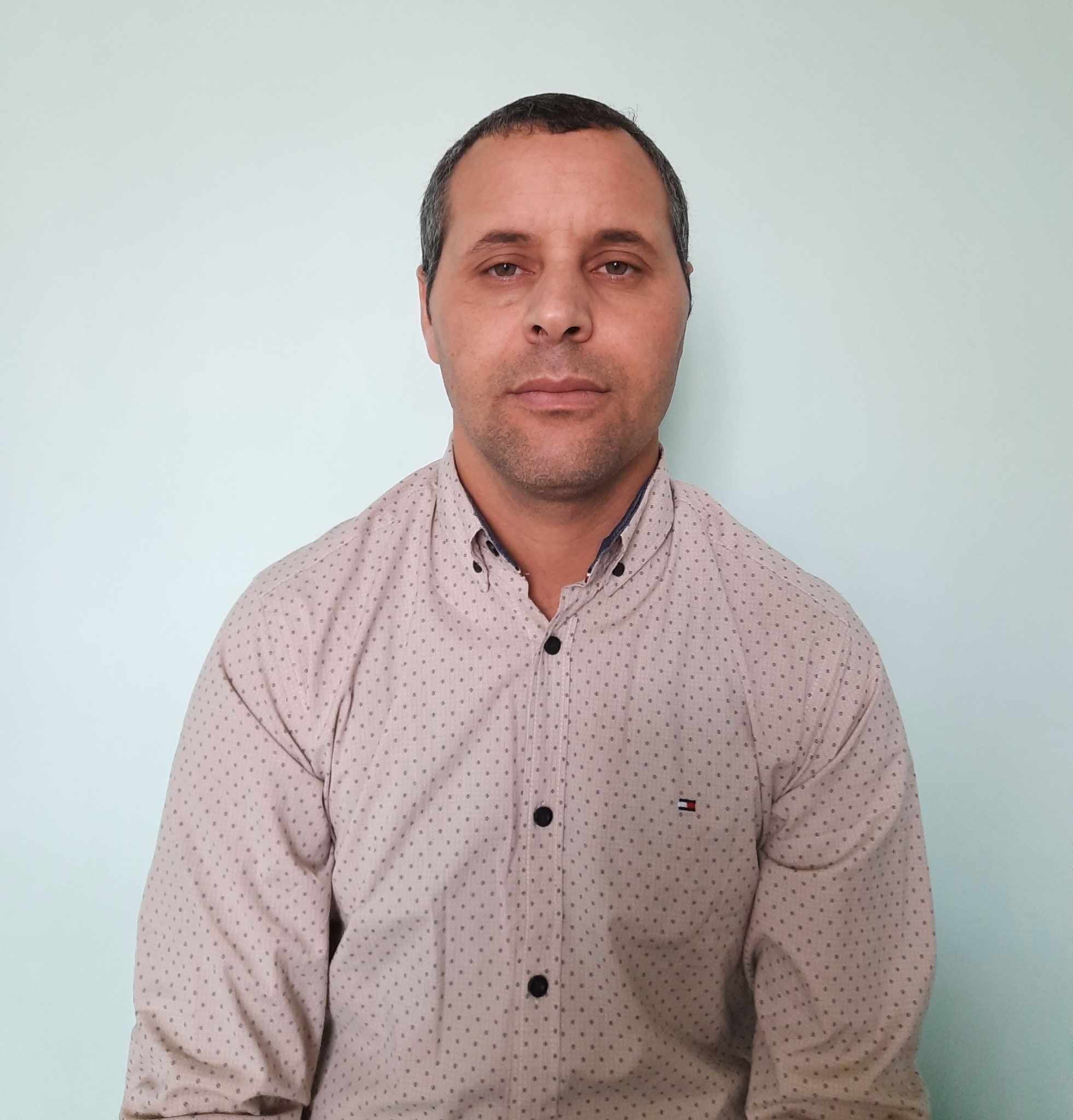
M. BOUALEM Mayache

Prof

Directory of teachers

Department

Departement of Nature and life sciences

Research Interests

Specialized in Departement of Nature and life sciences. Focused on academic and scientific development.

Contact Info

University of M'Sila, Algeria

On the Web:

  • Google Scholar N/A
  • ResearchGate
    ResearchGate N/A
  • ORCID N/A
  • SC
    Scopus N/A

Recent Publications

2025-01-19

Research of Eventual Residues of Pesticides in Strawberry Fruits Using Gas Chromatography Combined with Mass Spectrometry

Our research focused on the Jijel region, where strawberry cultivation expanded considerably from 4 hectares in 2002 to 661 hectares in 2023. This study aimed to identify any pesticide residues in strawberries (Fragaria x ananassa Duch). Over two years, strawberries were cultivated in a plastic greenhouse using pesticides to either prevent or treat diseases as they developed. The fruit samples were collected and analyzed using a gas chromatograph coupled with a mass spectrometer. Numerous components were identified in the treated strawberry fruits; some are unique to strawberries, while others have not been documented in literature as strawberry constituents. The majority of the compounds found in the strawberry fruit were polyphenolic metabolites, alkanes, esters, aldehyde, aromatic alcohol, fatty acids, carbohydrates, phthalates, plasticizer derivatives, and others. All treated strawberry samples from both seasons showed no detectable pesticide compounds in the fruit. Nevertheless, certain samples contained hazardous pollutants such as 1,2,4-Benzenetriol and hydroquinone, as well as pesticide metabolites like din-octyl phtalate. The strawberry extract contained compounds similar to those naturally present
in strawberries, but they appeared to have changed. Among the major components detected was a plasticizer compound: 1,2-benzenedicarboxylic acid mono (2-ethylhexyl) ester, identified as a pollutant result from the use of plastic materials in strawberry growing. These compounds were found to exhibit antioxidant, antimicrobial, antifungal, and insecticide properties. Some compounds were reported to have unknown activity. In conclusion, the fruits of treated strawberries
contain a variety of bioactive compounds along with pollutants that could affect human health.
Citation

M. BOUALEM Mayache, Fatima Naili, , (2025-01-19), "Research of Eventual Residues of Pesticides in Strawberry Fruits Using Gas Chromatography Combined with Mass Spectrometry", [national] Pollution , The University of Tehran Press

2024-09-23

Impact of fertilizer doses on soil properties, vegetative growth, fruit quality and biochemical compounds of strawberry (Fragaria ×ananassa Duch)

Fertilizers are important for plant growth, yield enhancement, and achieving food security, but overdose
can have negative effects. This study sought to determine the impact of different fertilizer doses on soil
properties, vegetative growth, fruit quality, and biochemical compounds of strawberry (Fragaria × ananassa
Duch) cv. ‘Camarosa’. During the years 2022-2023, strawberry seedlings were grown in pots in a greenhouse.
Four increasing dosages of fertilizers were applied. The results showed that following treatment, electrical
conductivity and soil organic matter rose to maximum values of 176.26 µS. cm-1 and 2.63%, respectively, with
d2 treatment. However, the pH was initially high before dropping considerably to 7.34 with d4 dosage.
Treatment d1 was highly suggested for enhanced fruit number (5.8) and total yield (729 g. plant-1). The
treatment d2 produced the highest fruit weight (24.3 g), volume (27.71 cm3), length (5.55 cm), and width (5.15
cm). The medium dose d3 drastically increased leaf area (2652.76 cm2), total soluble solids (7.4 °Brix), total
phenols (1,332.54 mg GAE· L-1) and antioxidant activity (89.53%), but not significantly. The maximum petiole
length (12.66 cm), petiole number (29.4), chlorophyll content, runners number (6), roots length (22.33 cm),
fresh root and shoot weight (73.11 and 96.41 g), root and shoot dry weight (10.84 and 30.64 g), were recorded
at d4 treatment. In control plants, all of these measures were lower, despite having higher fruit pH (3.72),
titratable acidity (0.87%), and flowers number (4.40). In conclusion, increasing fertilizer doses may affect soil
and strawberry plant qualities, and farmers must use them appropriately.
Citation

M. BOUALEM Mayache, (2024-09-23), "Impact of fertilizer doses on soil properties, vegetative growth, fruit quality and biochemical compounds of strawberry (Fragaria ×ananassa Duch)", [national] Notulae Scientia Biologicae , Horticulture and Forestry Society from Transylvania

2022-12-13

Composition chimique de fruit du fraisier par utilisation de chromatographie en phase gaseuse couplé ave spsctroscopie de masse

Abstract
Citation

M. BOUALEM Mayache, Naili Fatima, Mayache Boualem, , (2022-12-13), "Composition chimique de fruit du fraisier par utilisation de chromatographie en phase gaseuse couplé ave spsctroscopie de masse", [national] SNAMPD , Faculté des Sciences, Université de M'Sila

2022-06-01

A new species for the vascular flora of Algeria: Cyperus eragrostis (Cyperaceae)

This study provides a definition and description of Cyperus eragrostis as a new alien species to Algeria and North African flora. This hemicryptophyte, native to the tropical parts of South America, is recorded for the first time in Jijel eco-complex
wetlands in North-East Algeria. Applying the standard phytosociological method we studied the stands in which this alien species grows together with other hygrophilous and ruderal species. The present study improves the knowledge of the Algerian flora and completes the information about the distribution of C. eragrostis reported by the available international literature and public herbaria
Citation

M. BOUALEM Mayache, Bouldjedri Mohamed, Gerard De Belair, Sebti Mohamed, , (2022-06-01), "A new species for the vascular flora of Algeria: Cyperus eragrostis (Cyperaceae)", [national] Hacqueta , Instituto de Estudios Fiscales

2021-07-01

A new species for the vascular flora of Algeria: Cyperus eragrostis (Cyperaceae)

This study provides a definition and description of Cyperus eragrostis as a new alien species to Algeria and North African flora. This hemicryptophyte, native to the tropical parts of South America, is recorded for the first time in Jijel eco-complex wetlands in North-East Algeria. Applying the standard phytosociological method we studied the stands in which this alien species grows together with other hygrophilous and ruderal species. The present study improves the knowledge of the Algerian flora and completes the information about the distribution of C. eragrostis reported by the available international literature and public herbaria.
Citation

M. BOUALEM Mayache, (2021-07-01), "A new species for the vascular flora of Algeria: Cyperus eragrostis (Cyperaceae)", [national] Hcquetia , ZRC SAZU, Institut de biologie Jovan Hadži

2020-10-05

Structure of waterbird assemblages in fragmented coastal wetlands of Northeastern Algeria.

Structure of waterbird assemblages in fragmented coastal wetlands of Northeastern Algeria. This study was carried out from 2007–2017 at the ecological complex of the Jijel wetlands in the north–east of Algeria. Censuses were conducted during the twelve months of each year to study variation in richness and abundance of waterbird populations for each season. We
used distance sampling (point count and transect methods). A total of sixty species (eleven orders and sixteen families) were recorded. The Anatidae and Scolopacidae families were the most numerous with thirteen species. The common coot (Fulica atra), and the Mallard (Anas platyrhynchos) were the most abundant and frequent species each year. About 70% of the species recorded occur as migrants, passing between the western Palearctic and their winter quarters in North Africa. Phenologically, we found 15% were breeders, and from the point of view conservation status, 56% were rare, 40% were protected by Algerian regulations and 8% were threatened species listed in the Red List of the International Union for Conservation of Nature (IUCN). Our results of ornithological monitoring in the wetlands in Algeria show that action is needed to address the consequences between birds, human activities, and climate change.
Citation

M. BOUALEM Mayache, (2020-10-05), "Structure of waterbird assemblages in fragmented coastal wetlands of Northeastern Algeria.", [national] Arxius de Miscel·lània Zoològica , Museu de Ciències Naturals de Barcelona

2020-07-01

Phytoremediation of soil Contaminated by Heavy Metals within a Technical Landfill Center Vicinity: Algerian Case Study

The contamination of environment with heavy metals has become a serious problem which can affect the human health. Three heavy metals (Zn, Cd and Pb) were determined in soil and plants for below and aboveground parts along landfill
Demina center, located in the wilaya of Jijel, Algeria to evaluate their behavior and uptake by Ditrichia viscosa, Juncus effusus and Solanum nigrum. In our research we tried to study the capacity of these spontaneous plants to accumulate and to translocate heavy metals from soil to their tissues during three years. The heavy metals examined in the soils of the study area showed variations in concentrations, the study area may be practically unpolluted with Zn and Pb (CF; 0.45 and 0.98 successively) and very contaminated with Cd (CF; 8.53). According to the results obtained, the soil is uncontaminated with lead (Igeo=-0.60) and zinc (Igeo= -1.42) but it is heavily contaminated with cadmium (Igeo=2.5) along the study area. Overall the BCFS (bioconcentration factors) are superior to 1, for the all heavy metals and species.
However, BCFs follow the following order; BCFZn>BCFPb>BCFCd for Ditrichia viscosa, the following order BCFPb>BCFZn>BCFCd for Juncus effuses and follow the following order; BCFZn>BCFCd>BCFPb for Solanum nigrum. The TFs (translocation factor) of the present study showed that Solanum nigrum can translocate the three of the metals into
their aboveground parts
Citation

M. BOUALEM Mayache, (2020-07-01), "Phytoremediation of soil Contaminated by Heavy Metals within a Technical Landfill Center Vicinity: Algerian Case Study", [national] Pollution, , University of Tehran

Structure of waterbird assemblages in fragmented coastal wetlands of Northeastern Algeria

Structure of waterbird assemblages in fragmented coastal wetlands of Northeastern Algeria. This study was carried out from 2007–2017 at the ecological complex of the Jijel wetlands in the north–east of Algeria. Censuses were conducted during the twelve months of each year to study variation in richness and abundance of waterbird populations for each season. We used distance sampling (point count and transect methods). A total of sixty species (eleven orders and sixteen families) were recorded. The Anatidae and Scolopacidae families were
the most numerous with thirteen species. The common coot (Fulica atra), and the Mallard (Anas platyrhynchos) were the most abundant and frequent species each year. About 70 %
of the species recorded occur as migrants, passing between the western Palearctic and their winter quarters in North Africa. Phenologically, we found 15 % were breeders, and from
the point of view conservation status, 56 % were rare, 40 % were protected by Algerian regulations and 8 % were threatened species listed in the Red List of the International Union
for Conservation of Nature (IUCN). Our results of ornithological monitoring in the wetlands in Algeria show that action is needed to address the consequences between birds, human
activities, and climate change.
Citation

M. BOUALEM Mayache, (2020-07-01), "Structure of waterbird assemblages in fragmented coastal wetlands of Northeastern Algeria", [national] Arxius de Miscel•lània Zoològica , Museum of Barcelona’s publications

2018-12-01

Reproductive behaviour of Erythromma lindenii in Northeast Algeria (Odonata: Coenagrionidae)

The reproductive behaviour of the Atlanto-Mediterranean Erythromma lindenii Selys has been studied before in Europe, but not in North Africa where the climate is warmer.
We investigated the reproductive behaviour in a natural population in Northeast Algeria. We found that the species is non-territorial with quasi-exclusive underwater oviposition. The
duration of underwater oviposition was positively correlated to the maximum water depth. We suggest that females predominantly lay eggs underwater to avoid water evaporation,
which is common in North Africa. We discuss the differences in the reproductive behaviour between European populations and one in North Africa. Further key words. Damselfly, Zygoptera, copulation, underwater oviposition, drought, North Africa
Citation

M. BOUALEM Mayache, (2018-12-01), "Reproductive behaviour of Erythromma lindenii in Northeast Algeria (Odonata: Coenagrionidae)", [national] Odonatologica , SOC INT ODONATOLOGICA

2018-11-27

Evaluation de la gestion des déchets d’activité de soins dans l’est Algérien ; Cas du Centre Hospitalo-Universitaire de Batna

Healthcare waste refers to all wastes generated by the operation of healthcare facilities. Proper management and safe disposal of these wastes is an important step in the prevention of diseases and the protection of the environment. Algeria, like other developing countries, faces a series of challenges to ensure good healthcare waste management. To better manage healthcare waste, it is important to understand the current situation. The present descriptive cross-sectional study aims to evaluate, for the first time, the process of healthcare waste management in the University Hospital of Batna (where is the seconde time). The study involved a variety of data sources; on-site observation, and study of the hospital's archive. This work includes data from the year 2008 to the year 2015. The results are analysed using Excel 2016. The results showed that, the University Hospital of Batna generated an average of 92720.62 kg/year of hazardous healthcare waste during the period 2008-2015; of which 56.20% are infectious waste, 36.06% are chemical and/or toxic waste and 7.74% are anatomical waste. The average waste generation rate of hazardous healthcare waste during the period 2008-2015 was 0.40 kg/bed/day. The healthcare waste management process in the University Hospital of Batna is inadequate; segregation, collection, storage, transport and disposal of healthcare waste are important steps for good management that are ignored and not properly applied.
Keywords: Medical waste, Hospital waste, Infectious waste, Medical waste management, The University Hospital of Batna.
Citation

M. BOUALEM Mayache, (2018-11-27), "Evaluation de la gestion des déchets d’activité de soins dans l’est Algérien ; Cas du Centre Hospitalo-Universitaire de Batna", [national] Séminaire National ; Biotechnologie, Environnement et Santé, , Université de Jijel

2017-10-27

1. Etude de l’eco-éthologie du Fuligule nyroca (Aythya Nyroca, Güldenstädt, 1770) dans l’eco-complexe de zones humide de Jijel (Nord-Est de Jijel).

Le Nord-est Algérien dominées par un climat humide, renferment une vingtaine de zones humides de diversités et de structures assez semblables qui jouent un rôle primordial
pour l’hivernage et pour la reproduction de nombreuses espèces d’oiseaux d’eau. Elles sont très spacieuses et accueillent chaque année une grande variété d’oiseaux d’eau qui trouvent en ces milieux des lieux très propices pendant leur transit migratoire. Les zones humides de l’éco-complexe de la willaya de Jijel caractérisées par une richesse floristique et faunistique elles constituent des sites d’hivernage potentiel pour de nombreuses espèces d’oiseaux d’eau, plus de soixante espèces ont été dénombrée dont certaines sont protégées tel le fuligule nyroca et la poule sultane Mayache (2008). Parmi ces zones humides, celles constituant l’éco-complexe de zones humides de la wilaya de Jijel ; le marais d’El-Kennar, situé au sud du village d’El-Kennar et le marais de Redjla, située au nord de la ville de Taher. Ce sont deux réservoirs permanant d’eau douce dont le niveau d’eau est très dépendant des conditions climatiques.
Citation

M. BOUALEM Mayache, Birouk Amine, , (2017-10-27), "1. Etude de l’eco-éthologie du Fuligule nyroca (Aythya Nyroca, Güldenstädt, 1770) dans l’eco-complexe de zones humide de Jijel (Nord-Est de Jijel).", [international] 1er Congrès Nord-Africain D’ornithologie & 4ème Colloque International d’Ornithologie Algérienne , Université de Béjaia

2016-06-01

Body size, reproductive behaviour, and microhabitat use of two sympatric Trithemis species – what might allow their sympatry? (Odonata: Libellulidae)

. Sympatric territorial species are subject to interference competition when they share the same resources. The interaction becomes stronger when the coexisting species
share similar traits, which is often the case in congenerics. In this study, we investigated the body size, reproductive behaviour, and microhabitat use of two congeneric dragonflies,
Trithemis annulata and T. arteriosa, in Northeast Algeria from September to November 2012 in order to assess the potential factors that allow their coexistence in the same system. Even though T. annulata was larger than T. arteriosa, mistaken recognition was often observed. The behavioural sequence of both species exhibited broadly similar patterns in reproductive behaviour but they differed in mate guarding tactics and male-male interference. Copulation duration was shorter in T. annulata than in T. arteriosa. Oviposition bouts lasted longer in T. arteriosa but dipping was faster in T. annulata. Analysis of microhabitat choice showed that T. arteriosa males preferred vegetated areas to establish their territories while T. annulata used a wide array of habitats including terrestrial ones. Our data suggest that, although the two congeneric species are phenotypically similar and demonstrate low interspecific recognition abilities, they can coexist syntopically because they differ slightly in their habitat use and reproductive behaviour. Further
key words: Dragonfly, interspecific competition, copulation, mate guarding, habitat selection
Citation

M. BOUALEM Mayache, (2016-06-01), "Body size, reproductive behaviour, and microhabitat use of two sympatric Trithemis species – what might allow their sympatry? (Odonata: Libellulidae)", [national] Odonatologica , SOC INT ODONATOLOGICA

2015-03-22

Chemical composition and antimicrobial activity of essential oils in Xerophytic plant Cotula cinerea Del (Asteraceae) during two stages of development: flowering and fruiting

L'huile essentielle (HE) de Cotula cinerea Del récoltée dans la région d'Oued Souf (Sud-est Algérien) au cours de deux stades (floraison et fructification), a donné une performance qui est de 0,0801% ± 0,0117% au stade floraison ; et 0,391% ± 0,0664% au stade de fructification. L'étude chimique de l'(HE) de C. cinerea Del, analysée par GCMS, a montré la présence de 22 composés chimiques en période de floraison avec la dominance de : 3-Carène (30,99%), Thuyone (21,73%), triène Santolina (18,58%) et Camphre (6,21%). Alors que 21 composés chimiques ont été obtenus pendant la période de fructification avec une dominance : Thuyone (28,78%), 3-Carène (15,90%), Eucalyptol (15,13%), Santolina triène (13,38%) et Camphre (7,49%).Point de vue cinétique chimique et sa composition, il a été remarqué que pendant la phase de floraison, la plante a produit huit composés absents pendant la période de fructification. Alors que sept autres composés n'apparaissent que lors de la fructification. Il apparaît que l'antibactérien (EO) a C. cinerea Del La sensibilité des souches bactériennes testées ; et E. faecium, E.coli, M. morganii, P. vulgaris, S. aureus et A. baumannii ont montré une grande sensibilité ; la souche P. aeruginosa a montré une forte résistance à toutes les concentrations de (EO). Comme nous n’avons pas remarqué de différences significatives dans les diamètres d’inhibition avec toutes les souches en deux stades de croissance.
Citation

M. BOUALEM Mayache, (2015-03-22), "Chemical composition and antimicrobial activity of essential oils in Xerophytic plant Cotula cinerea Del (Asteraceae) during two stages of development: flowering and fruiting", [national] Journal of Applied Pharmaceutical Science , MediPOEIA Publications

2012-11-16

Le Tadorne casarca Tadorna ferruginea dans la vallée d'Oued Righ (Sahara Algérien)

In the study conducted in the wetlands of the valley of Oued Righ (Sahara North-eastern Algeria) between August 2008 and July 2011, the Ruddy Shelduck Tadorna ferruginea present status of sedentary breeder. The maximum recorded was 892 individuals observed during the second half of October while the lowest numbers were yearly recorded during the months of June, July and August. The analysis of the diurnal time budget shows that feeding is the main activity. She has almost 50 % of the balance sheet total. It is followed by the activity of movement (swimming : 9.28%, walking : 2.62% and flight: 1.75%), sleeping (16.91 %), preening (7.85 %), activities of courtship (4.38 %), antagonism (4.03 %) and resting (3.88 %). The wetlands in the valley are a most favorable zone for this species. Sabkhas and saline lakes are very good breeding place with more than fifty nests. The total number of these in the whole valley was estimated at 101 to 148.
Citation

M. BOUALEM Mayache, (2012-11-16), "Le Tadorne casarca Tadorna ferruginea dans la vallée d'Oued Righ (Sahara Algérien)", [national] Alauda , Société d'Etudes Ornithologiques de France

2011-06-28

Threats to and conservation of North African wetlands: The case of the Ramsar site of Beni-Belaid (NE Algeria).

En raison de leur contexte bioge´ographique et ge´omorphologique, les zones humides du Nord-Est de l’Alge´ rie pre´ sentent une grande richesse spe´ cifique et coenologique. L’e´tude
de la ve´ge´tation du site Ramsar de Beni-Belaid (Petite Kabylie) a montre´ l’existence de quatre principales communaute´ s ve´ge´tales re´parties sur des gradients d’hydrologie et de
perturbation. Les re´ sultats obtenus re´ve`lent d’importantes menaces sur le court terme : le surpaˆturage entraıˆne l’envahissement du lac par le sable e´ rode´ des dunes littorales ;
l’agriculture est a` l’origine de de´frichements ille´gaux, d’une pollution des eaux et de pompages excessifs dans la nappe phre´atique ; enfin, la chasse et la peˆche sont ille´galement pratique´es au sein meˆme du site Ramsar. Une prise de conscience des pouvoirs publics est ne´ cessaire pour : (1) mettre en de´fens la zone humide dans le but de restaurer une ceinture forestie` re tampon et (2) d’initier une campagne de sensibilisation et d’implication de la population locale dans la gestion conservatoire du site
Citation

M. BOUALEM Mayache, (2011-06-28), "Threats to and conservation of North African wetlands: The case of the Ramsar site of Beni-Belaid (NE Algeria).", [national] C.R.Biologies , ACADEMIE DES SCIENCES? Institut de France

2011-03-01

un nouveau site de reproduction du Flamant rose Phoenicopterus roseus. Flamingo

The Greater Flamingo Phoenicopterus roseus reproduced this year at Chott Merouane (wilaya d’El-Oued, Algeria northern Sahara). Incubation began on 2 May 2010 and ended 17 June 2010. Approximately, 86% of eggs hatched and the chicks left nests in the third week of June. At the end of June, after the drying out of the chott, Red Fox Vulpes vulpes and Fennec Fox Vulpes zerda were able to reach the second core of nests and consumed eggs causing a rate of failure estimated at 12%. From the end of June the crèche of 2240 chicks gathered in the center of the site. The chicks left the site on 2 October 2010.
Citation

M. BOUALEM Mayache, (2011-03-01), "un nouveau site de reproduction du Flamant rose Phoenicopterus roseus. Flamingo", [national] Bulletin of the Flamingo Specialist Group , Bulletin of the IUCN-SSC/Wetlands International

2010-01-01

Écologie de la reproduction de l’Echasse blanche Himantopus Himantopus dans la garaet de Guellif (Hauts plateaux de l’est algerien

The Black-winged Stilt Himantopus himantopus is a sedentary species breeding in the high plains of eastern Algeria. It frequents nesting sites only during the breeding season (late March to June). The study of the ecology of its reproduction out of colony of 237 nests installed on the islets of Garaet Guellif during 2005 gave an average size of egg -laying around 3.90 eggs / nest. The openings have been extended from 54 days either from 25 April to 17 June 2005. The success rate of opening is of 73.83% and the failure rate is of 26.16%. The main cause of the failure of hatching eggs in this species is the abandon nests. The choice of facilities nests on the islands seems to have a preference for a large area and which are farthest from the bank of the Garaet. The Black-winged Stilt probably prefer to settle in the area between 0 and 5 m of water wherever vegetation is non-existent however living space appreciated for a nest or a couple of Black-winged Stilt is between 1.21 and 4 m2
Citation

M. BOUALEM Mayache, Mohamed-Chérif MAAZI, Menouar SAHEB, Abdelaziz BOUZEGAG, Sihem SEDDIK, Yacine NOUIDJEM, Ettayib BENSACI, Azzedine CHEFROUR, Moussa HOUHAMDI, , (2010-01-01), "Écologie de la reproduction de l’Echasse blanche Himantopus Himantopus dans la garaet de Guellif (Hauts plateaux de l’est algerien", [national] Bulltin de l’institut Scientifique, Rabat, section Sciences de la vie. , institut Scientifique, Rabat

Statut et écologie des peuplements de Laro-limicoles et d’Echassiers dans le Lac de Timerganine (Oum El-Bouaghi, Algérie)

From September 2005 to August 2007, we carried out an inventory of the population of Laro-limicols and waders in Lake Timerganine (high plains south of Constantine region, Algeria), which is a set of interconnected puddles fed by fresh waters of Oued Boulefraiss, and a study of their ecology. We inventoried 39 species of waterbirds belonging to 10 families of Laro-limicols and Wading birds, 12 breeding species among which 7 in Lake Timerganine, 17 regular wintering and 10 species use the lake only during meadow and post nuptial passage. These birds use the lake in various ways related mainly to their biology. Ardeidae are generally observed in the water plane near phragmites with Phragmites australis whereas Limicols scatter on banks and in the zones of water balance, far from disturbances. The main places of concentration of Laridae remain the same than those occupied by the other water birds (Anatidae, Coots and Grebes) in the center of the water plane, where they show small groupings synonymic of typical gregariousness regularly noted within this waterfowl.
Citation

M. BOUALEM Mayache, (2010-01-01), "Statut et écologie des peuplements de Laro-limicoles et d’Echassiers dans le Lac de Timerganine (Oum El-Bouaghi, Algérie)", [national] Bulletin de l’Institut Scientifique, Rabat, section Sciences de la Vie , l’Institut Scientifique, Rabat,

2008-07-01

Ecologie des Sarcelles D’hiver Anas Crecca Crecca L. Hivernants Dans L’éco-Complexe de Zones Humides de Jijel (Nord-Est de L'algerie)

The ecological study of the green winged Teal in two humid sites of the ecocomplex of Jijel wetlands (North-East of Algeria) showed many similarities. Béni-Belaid
Lake, which has water throughout the year and because of its geographical position near the Mediterranean, was firstly visited. The marsh of El-Kennar which dries during the
summer season has not been colonized by this species until the end of October. These Anatidae leave chronologically the Lake of Béni-Bélaid then the marshes of El-Kennar
which hosted the largest numbers (twice than that of Béni-Bélaid Lake). Diurnal time activity budgets were quantified in the both sites and showed that
sleeping is the most important activity. It largely dominates their time budget (58.27% in Béni-Belaid Lake and 61.68% in El-Kennar marsh). It is followed by swimming with 21%
in Béni-Belaid Lake and 19% in El-Kennar marsh, then preening and grooming (15.93% in Béni-Belaid Lake and 08.96% in El-Kennar marsh). Food is, however, noted with very low
rates in Béni-Belaid Lake (01.43%) and is sporadically high in El-Kennar marsh (09.5%). At the end, the flight characterizing regrouping occurred following a disturbance; however,
it is the lowest represented activity. As a result, the two studied wetlands sites play clearly the role of roosting area of diurnal time-activity budgets for the wintering populations of
green winged Teal.
Citation

M. BOUALEM Mayache, (2008-07-01), "Ecologie des Sarcelles D’hiver Anas Crecca Crecca L. Hivernants Dans L’éco-Complexe de Zones Humides de Jijel (Nord-Est de L'algerie)", [national] European Journal of Scientific Research , EuroJournals Publishing, Inc. 2008

← Back to Researchers List