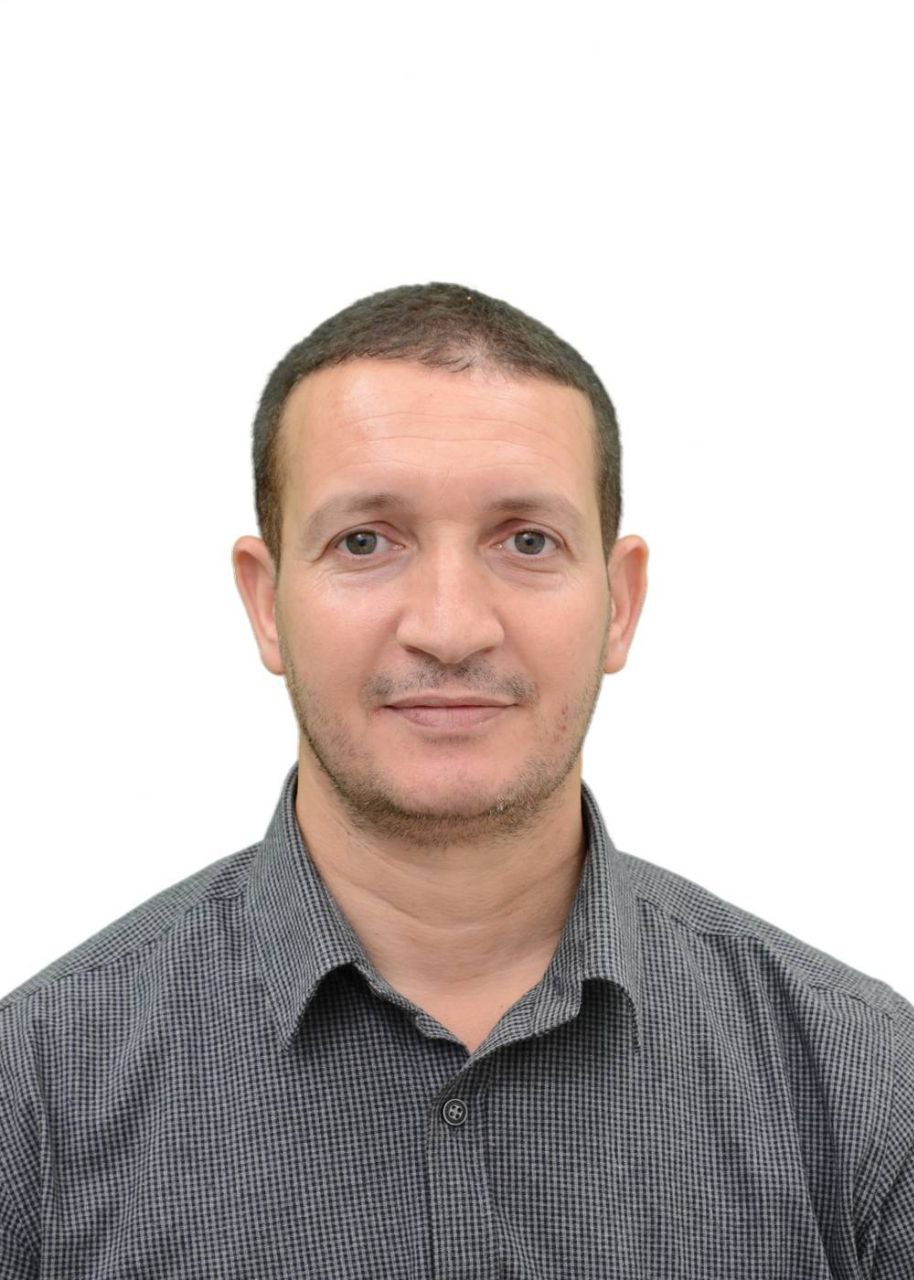
M. BOURAS Mounir

Prof

Directory of teachers

Department

Departement of ELECTRONICS

Research Interests

Modeling and Simulation, Optics and Photonics, Thin Films, Nanophotonics, mangeto optics

Contact Info

University of M'Sila, Algeria

On the Web:

  • Google Scholar N/A
  • ResearchGate
    ResearchGate N/A
  • ORCID N/A
  • SC
    Scopus N/A

Recent Publications

2024-12-24

SOLAR CELL ALGERIA

AA
Citation

M. BOURAS Mounir, (2024-12-24), "SOLAR CELL ALGERIA", [national] International Conference on Electrical Engineering , ALGER

2024-10-23

OPTICAL MATERIAL

AA
Citation

M. BOURAS Mounir, (2024-10-23), "OPTICAL MATERIAL", [international] NANOMATERIAL 2024 , TUNISIA

SOLAR CELL

AA
Citation

M. BOURAS Mounir, (2024-10-23), "SOLAR CELL", [international] NANOMATERIAL 2024 , TUNISIA

2024-02-12

hh

QAA
Citation

M. BOURAS Mounir, (2024-02-12), "hh", [national] nn , ALGER

High-Performance Silicon Nitride Grating-Coupled SPR Sensors for Gas Detection and Biosensing

Surface Plasmon Resonance (SPR) serves as a crucial optical technique in the realm of chemical sensing. Under specific
conditions, the reflectivity of a thin metal film exhibits an exceptional sensitivity to optical changes in the medium on one side. In this
investigation, we propose and simulate a plasmonic sensor incorporating a silicon nitride grating with Ag layers for the detection of
solution and gas at an optical communication wavelength of 1550 nm. In both cases of the surface diffraction-grating, there is a notable
enhancement in angular sensitivity compared to conventional prism-coupled configurations. Simulations, employing rigorous coupled
wave analysis (RCWA), highlight that the suggested sensor, optimized in design parameters, offers notably superior sensitivity, a lower
detection limit, and a higher figure of merit (FOM) than existing grating-based SPR sensors. This implies the potential realization of
refractive index sensors with a high figure of merit through such streamlined and compact configurations.
Citation

M. BOURAS Mounir, (2024-02-12), "High-Performance Silicon Nitride Grating-Coupled SPR Sensors for Gas Detection and Biosensing", [national] Progress In Electromagnetics Research Letters , PIER

2022-12-11

Light Trapping for Absorption Control in Perovskite-Based Photovoltaic Solar Cells

Nanostructure based perovskite solar cells with high performance are the focus of study
in current work, keeping in view the improvement in cell efficiency. In the rst part of the study, a
plane-layered solar cell is studied by adding a 1D Photonic Crystal (1D PhC) at the bottom of the
cell in order to facilitate the photon rotation process. However, in the second part of the study, it is
observed that the addition of grating enhances the light absorption due to photon trapping. Following
that, the light absorption of three different structures is compared. The observations reveal that the
short-circuit current density (Jsc) is found to be 􀀀39:93mA/cm2, which is 87.29% higher than that for a
planar structure exhibiting the short-circuit current density (Jsc) value of 􀀀21:32mA/cm2. Finally, the
efficiencies of these nanostructured perovskite solar cells are found to be signi cant. For the proposed
solar cell structure an 87.24% improvement in the power conversion efficiency (PCE) is observed, i.e.,
from 14.03% for the planar structure to 26.27%.
Citation

M. BOURAS Mounir, (2022-12-11), "Light Trapping for Absorption Control in Perovskite-Based Photovoltaic Solar Cells", [national] Progress In Electromagnetics Research Letters , PIER

2022

A New Design for Enhancing Highly Sensitive Interferometer Biosensor Using a Silicon Rib Waveguide

In this paper, we have proposed a new design, to enhance and simulate a Highly Sensitive Mach-Zehnder Interferometer (MZI) Biochemical sensing platform using a Silicon Rib Waveguide. We considered two different MZI configurations: the first one with an S-bend & Y-junction and the second with an angular Y-junction. We determined the critical cutoff radius and the critical cut-off angle for the S-bend & Y-junction and the angular Yjunction configurations respectively. Based on the analyses of the evanescent field intensity, the mode polarization and cross section dimensions of the Silicon Rib waveguide are optimized using beam propagation method. The critical parameters of the design are calculated to ensure minimal optical losses and a new sensitivity value of 308 dB/RIU with a detection limit of 10-7, which shows the ability of the structure to produce biosensor.
Citation

M. BOURAS Mounir, (2022), "A New Design for Enhancing Highly Sensitive Interferometer Biosensor Using a Silicon Rib Waveguide", [national] Instrumentation Mesure Métrologie , International Information and Engineering Technology Association

Étude théorique des matériaux a cristaux photoniques unidimensionnels : applications dans le domaine de détection

Étude théorique des matériaux a cristaux photoniques unidimensionnels : applications dans le domaine de détection
Citation

M. BOURAS Mounir, (2022), "Étude théorique des matériaux a cristaux photoniques unidimensionnels : applications dans le domaine de détection", [national] MSILA UNIVERSITY

amélioration d'un biocapteur

amélioration d'un biocapteur
Citation

M. BOURAS Mounir, (2022), "amélioration d'un biocapteur", [national] MSILA UNIVERSITY

Design of a Thickness Sensor Based on a One-Dimensional Phononic Crystal

Nowadays, sensor technology has attracted great interest in various domains. In this work,
we have analyzed a one dimensional phononic crystal made by the stack of N bilayers of
(LiNbO3/SiO2). The sensor design consists of a one dimensional phononic crystal structure
with a defect layer inserted in the middle. Using the Transfer Matrix Method (TMM), the
transmission spectrums of acoustic waves are calculated and plotted. In this work, we are
interested in the resonance peak that is transmitted inside the phononic band gap. The
results obtained show clearly that the resonant frequency of the measured transmission
peak is very sensitive to the layer defect properties. This proves that such structure offers
a new platform for sensing applications.
Citation

M. BOURAS Mounir, (2022), "Design of a Thickness Sensor Based on a One-Dimensional Phononic Crystal", [national] Instrumentation Mesure Métrologie , I2M

Boosting faraday rotation in a one-dimensional coupled resonator magneto-plasmonics structure made by silica matrix doped with magnetic nanoparticles

The study aims to evaluate the Faraday rotation of one-dimensional structure coupled
resonator magneto-plasmonics by a metal cover layer. To this purpose, we used SiO2/ZrO2 or SiO2 /TiO2
crystals doped with magnetic nanoparticles by sol-gel process in different configurations and a gold layer of
10 nm thick for the excitation of the surface Plasmon Polaritons (SPPs). Based on Tamm plasmon, a wide
range of wavelengths is detected by which the merit factor increases due to the interaction of light with the
Tamm plasmon and surprisingly the optical window in this region in addition to the main resonance. These
structures offer the opportunity to improve the performance of magneto-optical devices.
Citation

M. BOURAS Mounir, (2022), "Boosting faraday rotation in a one-dimensional coupled resonator magneto-plasmonics structure made by silica matrix doped with magnetic nanoparticles", [national] Advanced Electromagnetics , AEM

Improve Efficiency and Reduce Cost of Perovskite-Based Solar Cell

This work utilizing “RSOFT’s Diffract MOD and solar Cell Utility” based on RCWA calculation to analyze the behavior of the solar cell and to compute the PCE (power conversion efficiency) (RSoft CAD photonic device tools) was used to study the effect of the materials used in the different layers of the perovskitebased solar cell on the efficiency of this cell. We used perovskite as the active layer, PDMS as a window layer, ZnS as ETL (electron transport layer) and AZO as HTL (hole transport layer). and make a change of reflective
layer from Au (Gold) to different reflective layers candidate have been suggested. So that in the beginning we used gold as a reflective layer, we found the efficiency of this cell estimated at 21.43%, we changed the reflective gold layer with different other reflective layers such as (Al, Cr, Be, Ni, Ti…) in order to increase the efficiency of this solar cell and reduce the cost because the cost of gold is high, we found that the efficiency increased in most of the candidates to reach 24.23% when Be was placed as a reflective layer, and this is a significant increase in the efficiency of the solar cell.
Citation

M. BOURAS Mounir, (2022), "Improve Efficiency and Reduce Cost of Perovskite-Based Solar Cell", [international] ICATEEE 2022 , University Mohamed Boudiaf of M’sila

K

1
Citation

M. BOURAS Mounir, (2022), "K", [national] K , MSILA

H

K
Citation

M. BOURAS Mounir, (2022), "H", [national] Q , MSILA

2021

Boosting Faraday rotation in a one-dimensional coupled resonator magnetoplasmonic structure made by silica matrix doped with magnetic nanoparticles.

Boosting Faraday rotation in a one-dimensional coupled resonator magnetoplasmonic structure made by silica matrix doped with magnetic nanoparticles.
Citation

M. BOURAS Mounir, (2021), "Boosting Faraday rotation in a one-dimensional coupled resonator magnetoplasmonic structure made by silica matrix doped with magnetic nanoparticles.", [international] The 11th International Conference on Metamaterials, Photonic Crystals and Plasmonics , POLAND

Étude théorique des cristaux magnéto-photoniques unidimensionnels pour l’amélioration de l’effet faraday

Étude théorique des cristaux magnéto-photoniques unidimensionnels pour l’amélioration de l’effet faraday
Citation

M. BOURAS Mounir, (2021), "Étude théorique des cristaux magnéto-photoniques unidimensionnels pour l’amélioration de l’effet faraday", [national] MSILA UNIVERSITY

High-Sensitive Thermal Sensor Based on a 1D Photonic Crystal Microcavity with Nematic Liquid Crystal

In this study, 1D Photonic Crystal (PhC) with Nematic Liquid Crystal (N-LC) central
microcavity is analyzed and discussed using Rigorous Coupled Wave Analysis (RCWA) method. A
microcavity is inserted into the 1D PhC by the Air Defect, making it ideal for measuring the properties
of an N-LC contained inside the microcavity. Here simulation is considered for NLC (E7) as a thermal
sensor. The principle of photonic crystal thermal sensor operation is studied in the TE mode of the
incident beam. We conduct a detailed study of the thermal sensor with differences in the width of
central microcavity of N-LC. The sensitivity and quality factor are evaluated
Citation

M. BOURAS Mounir, (2021), "High-Sensitive Thermal Sensor Based on a 1D Photonic Crystal Microcavity with Nematic Liquid Crystal", [national] Progress In Electromagnetics Research M , PIER

2020

Optimization study of perovskite-based solar cells using R-soft package

QQ
Citation

M. BOURAS Mounir, (2020), "Optimization study of perovskite-based solar cells using R-soft package", [international] International Conference on Electrical Engineering (ICEE) , TURKY

Phononic band gap of longitudinal acoustic waves in one-dimensional crystal for ultrasonic applications

QQ
Citation

M. BOURAS Mounir, (2020), "Phononic band gap of longitudinal acoustic waves in one-dimensional crystal for ultrasonic applications", [international] The 11th International Conference on Metamaterials, Photonic Crystals and Plasmonics , POLAND

Modeling of photonic band gap in 1D magneto-photonic crystals made by SiO2/ZrO2 or SiO2/TiO2 doped with magnetic nanoparticles ‏

DD
Citation

M. BOURAS Mounir, (2020), "Modeling of photonic band gap in 1D magneto-photonic crystals made by SiO2/ZrO2 or SiO2/TiO2 doped with magnetic nanoparticles ‏", [international] ICEE , TURKY

2019

Effect of Oblique Light Incidence and cavity length on band-gap properties of One Dimensional Photonic Crystals

We have investigated the optical properties of one-dimensional photonic crystals composed
of multilayer thin films having the form (AB) 7, where A=Si and B=Air for the oblique light
incidence and with defect layer. The selection of Si and Air is that because of their wide
applications like beam splitting, high reflecting mirrors and antireflection coating. The properties
of the structure are simulated using the Rigorous Coupled Wave Analysis (RCWA) method. The
bandgap of the photonic crystal was also calculated. It is found that the bandgaps exist in the
region (700–1900 nm). Similar crystal oblique light incidence and with central air defect by
changing the position and with defect, respectively, in different orders was also studied. It is found
that both position and width depend on the incidence angle and defect parameters
Citation

M. BOURAS Mounir, (2019), "Effect of Oblique Light Incidence and cavity length on band-gap properties of One Dimensional Photonic Crystals", [international] ICCESEN-2019 , turky

Analysis of highly sensitive biosensor for glucose based on a one-dimensional photonic crystal nanocavity

A one-dimensional (1-D) photonic crystal (PhC) composed of multilayer thin films having the form (Si  /  Air)9 is investigated. The selection of Si and air is because their use as a material platform provides the ability to fabricate sensors with other photonic devices on a single chip. We design a biosensor concept that uses an optical resonance in a 1-D silicon PhC with an air defect, which is theoretically studied for refractive index (RI) sensing in the infrared wavelength region (700 to 1900 nm). A similar crystal with a defect layer by changing the dielectric constant in different orders is also studied. A method is presented to maximize the sensitivity of the biosensor and to obtain a very narrow bandwidth cavity mode for good biosensor resolution. We optimized the thickness of the air defect layer in the PhCs on both sides of the nanocavity and show that a high sensitivity value of 1118 nm/refractive index unit (RIU
Citation

M. BOURAS Mounir, (2019), "Analysis of highly sensitive biosensor for glucose based on a one-dimensional photonic crystal nanocavity", [national] Optical Engineering , International Society for Optics and Photonics

Magneto-Photonic Crystal Micro-Cavities in One Dimensional Photonic Crystals Fabricated by Sol Gel Process

In this paper, we present a study on the photonic band gap of one-dimensional photonic crystals made by SiO2/ZrO2 or SiO2/TiO2 doped with magnetic nanoparticles using the sol–gel process. The studied structure consists of a multilayer of SiO2/ZrO2 or SiO2/TiO2 and air gap with lattice constant a = 0.70 μm. The structure is characterized by a background refractive index of 1.51. We started by introducing one defect at different locations, then we followed by two and three defects at different locations. The results obtained show clearly that these magnetic micro-cavities may serve as a fundamental structure in a variety of ultra-compact magneto photonic devices such as optical isolators and modulators in the future.
Citation

M. BOURAS Mounir, (2019), "Magneto-Photonic Crystal Micro-Cavities in One Dimensional Photonic Crystals Fabricated by Sol Gel Process", [national] Journal of Nanoelectronics and Optoelectronics , American Scientific Publishers

Existence of high Faraday rotation and transmittance in magneto photonic crystals made by silica matrix doped with magnetic nanoparticles

This paper focuses on studying the potential of CoFe2O4-doped magnetic nanoparticles SiO2 / ZrO2 matrix to produce high-performance one-dimensional magnetophotonic crystals (MPC) and to solve the problem of integrating magneto-optical devices. Given the importance of the magneto-optical Faraday effecton most non-reciprocal optical components, we studied the influence of different 1D structures on Faraday rotations.The potential of these structures offers a wide range of applications in the field of miniaturized and integrated non-reciprocal devicessuch as isolators.
Citation

M. BOURAS Mounir, (2019), "Existence of high Faraday rotation and transmittance in magneto photonic crystals made by silica matrix doped with magnetic nanoparticles", [international] Optik , Urban & Fischer , POLAND

← Back to Researchers List